
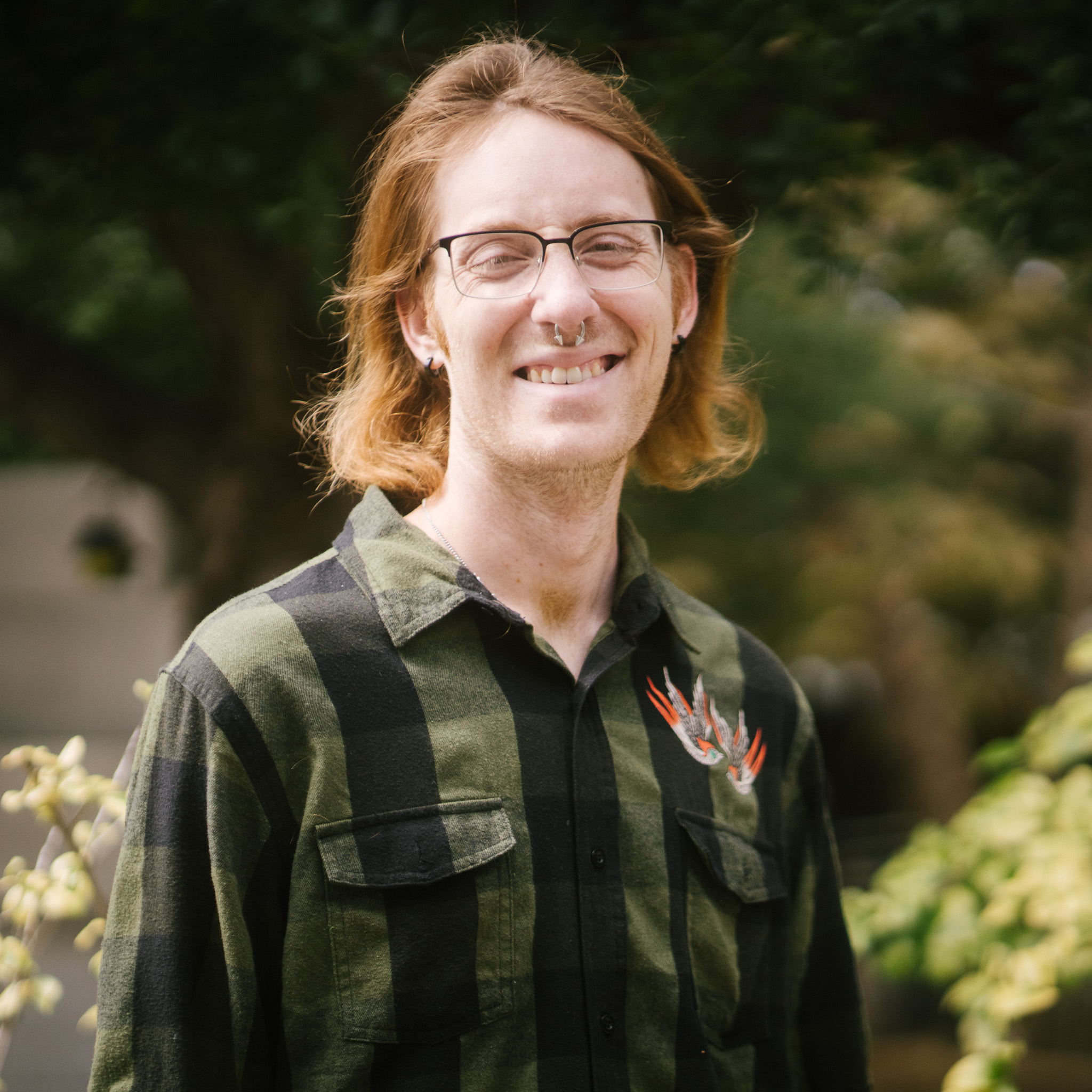
At 23 years old, Max M. has already spent a surprising amount of his life becoming different versions of himself. There was Max the quiet kid with dreadlocks down his back who loved heavy metal. Max the teenage drug dealer. Max the kid on probation. Max the party guy with cocaine and a reputation. Max the Deadhead dropping acid and chasing higher consciousness. Max the artist. Max the skeptic. Max the guy sleeping in his car. And eventually, Max the guy doing ketamine every day while his body gave him increasingly difficult warnings that something was very wrong. Addiction, he realizes now, made him remarkably good at shape-shifting. “I think as addicts, we can be the ultimate chameleons. We can hide from the world better than so many people can.”
Today, Max is a resident at Beit T’Shuvah, and when asked to choose one word to describe himself, he chooses “resilient.” It fits. His story contains addiction, arrests, homelessness, close calls with death, and enough loss to make a person question whether life—or God—has any coherent plan at all.
Max was born in Glendale, California, to parents with an adventurous streak. Before he was born, they drove from New York to Los Angeles in a Volkswagen bus while his mother was pregnant with him. “Yeah,” Max laughs when asked if they were hippies. His mother never really lost that adventurous spirit. During the school year, Max lived in La Crescenta, a small foothill community where the elementary, middle, and high schools were all within a couple miles of each other. Summers were different. His mother took him across the country, particularly through the South. They traveled through Georgia, Louisiana, and the Carolinas, giving Max an unusually expansive view of the country from a young age. “She believed that I should see the country,” he remembers.
His mother also gave him art. Maxfield was named after painter Maxfield Parrish, while his older brother, Jasper, was named after Jasper Johns. His mother took her sons to museums like the Getty, where Max would carry a sketchbook and attempt to recreate the paintings in front of him. “I just love art.” His childhood memories of his mother contain movement, museums, and mystery. Later, however, those memories would become intertwined with addiction and grief.
When Max was 12, his aunt died from alcohol poisoning. His mother had spent years trying to save her sister from alcoholism, and when the family went to check on her, Max saw his aunt dead on the couch with bottles still beside her. It was his first intimate encounter with the reality that addiction could actually kill someone. It also changed his mother. “She took it extremely hard, and she started drinking as a result.” For the next several years, alcohol transformed the adventurous woman Max knew into someone capable of tremendous anger fueled by intoxication. Looking back, Max can recognize the trauma underneath it. He understands the grief and helplessness his mother carried after trying unsuccessfully to save her sister. As a 12-year-old living inside it, understanding was much harder. “I couldn’t stay at home.” So he found ways not to be there.
Weed and alcohol came first. Then Xanax, OxyContin, and cough syrup. The appeal wasn’t complicated: “Complete escapism.” With pills, Max could get somewhere marijuana and alcohol couldn’t quite take him. “I was on a cloud. I felt good, and nothing else existed. Nothing else really mattered.” But the drugs offered more than numbness. They also gave the quiet kid an identity. By high school, Max had access to things other teenagers wanted. Suddenly, he was invited to parties. People knew his name. Some feared him, some respected him, and plenty wanted what he had. “I could hide behind the persona.”
At 14, that persona collided with consequences when Max was arrested on an armed robbery charge after he and another boy robbed kids at a mall using a fake gun. He spent time in juvenile detention and received probation. It was the first time he remembers seeing his parents visibly hurt by what he was doing, but there was a significant hole in the intervention: nobody addressed his substance use. “The thing that the system fucked up on was they didn’t realize that I was an addict.” Because his probation did not include drug testing, Max continued using. Soon, he was selling cocaine.
Cocaine was different. “That was the thing that ruined my life forever. It was the first time I felt like I had met the real love of my life.” It strengthened the mythology surrounding him. It was social, exciting, and made him feel important. The kid who once felt uncool was suddenly getting girlfriends, going to parties, and meeting people he never imagined he would. But underneath the reputation was still the same kid who wanted some peace at home. The character was working on the outside; inside, very little had actually changed.
At 16, however, something unexpected happened: his mother got sober. Through AA, the woman whose drinking had made home unbearable began becoming herself again. “She was just happy. I finally got to see her happy.” Watching his mother recover affected Max deeply. He backed away from harder substances and drifted toward psychedelics, Grateful Dead shows, and a more hippie identity. He entered his first serious relationship, and for a while, life seemed to be moving somewhere better. His mother had gotten sober. Maybe he could figure it out too.
But life had different plans. When he was 18, Max came home from work one day to the news that his mother had been diagnosed with cancer. Everyone reassured him that she would be okay. It was ovarian cancer, they told him. It’s survivable, they said. Max remembers feeling differently. He had a feeling inside him that told him something bad was coming. One day, his mother could no longer get out of her chair. She was so weak the family had to bring her water. That night, she died.
This was only two weeks after her diagnosis.
Some losses hurt. Others change the entire direction of a life, creating a permanent line between who you were before and who you became afterward. For Max, losing his mother was that kind of loss. “I just couldn’t believe it,” he choked up while wiping the tears from his face. There had been no time to prepare, no gradual goodbye. The woman who had driven him across America, introduced him to art, survived her own descent into alcoholism, and fought her way back into happiness was suddenly gone. Max had already watched addiction take his aunt. Now cancer had taken his mother almost without warning.
“I fell right back into where I was. I was angry. I felt like the world had betrayed me. Nothing was going to be okay ever again.” He returned to drugs and began spending his days at his dealer’s house. He lied to his girlfriend. Grief became anger, and anger became another reason not to be sober. “I was inconsolable. I tried so hard to get out of it, but I couldn’t.” His girlfriend, whom he had met in high school, stayed beside him through the loss and repeatedly tried to help him build something stable. Max still speaks about her with gratitude. Their relationship lasted four and a half years, but eventually the weight of addiction, grief, and simply growing into different people became too much.
His mother’s death also shattered his relationship with faith. Max had been raised Jewish and had a bar mitzvah, but after losing her, the idea of a loving God became impossible for him to reconcile with what had happened. He searched elsewhere—Buddhism, spiritual philosophies, and even Satanism. “I was a card-carrying member…they mail you a card when you join.” He looked for anything that might make suffering make sense. The question only became louder when Noah, his childhood friend who had introduced him to pills, died. “What loving God would take these imperative people in his life, trying to be better?” For years, Max could not find an answer.
After the end of his long-term relationship, Max left his girlfriend’s family home and lived in his car for several months. Remarkably, he continued working throughout that period, showering wherever he could and saving enough money to eventually get an apartment. For a moment, it looked like he had pulled himself back together. Then he found ketamine.
Soon, Max was using significant amounts of ketamine daily. The apartment disappeared, and he moved into a group living situation in Van Nuys, where he slept on a piece of foam while continuing to work and use. His body began sending warnings: chronic exhaustion, pins and needles in his extremities, and symptoms he feared could be diabetes. Yet going to a doctor brought up another terror. “My mother goes to a doctor, and two weeks later she’s dead.” So Max did what addiction had trained him to do: avoid, numb, and continue. “If I could just keep my head right above water, I would be fine.”
There were nights at a bar when friends had to drag him outside, put him in his car, and try to revive him with cold water and sugar. Still, he returned. By then, death no longer sounded entirely frightening. “I didn’t want to be here, and I didn’t want to keep doing what I was doing, but I didn’t feel like I had a choice because feeling the pain was not an option.” He wasn’t necessarily planning to end his life, but he had reached a place where if the drugs killed him, some part of him was willing to accept it. The value of his own life had become almost impossible for him to see.
Eventually, Max stopped answering his family’s calls. Nearly two months passed without meaningful contact. Then one day, his family showed up on his front lawn. They sat him down and told him how scared they were. Among them was his sister-in-law, the woman who had married Max’s older brother and built the kind of family Max had watched from a distance with admiration. Max’s brother knew addiction himself. Years earlier, he had actually been a resident at Beit T’Shuvah. He bought a house, got married, and became the father of two boys. Max had stood beside him as best man at his wedding and remembers feeling genuinely happy watching his brother build a life neither of them had been guaranteed.
Now his sister-in-law was sitting in front of Max, terrified that addiction was going to take him. She told him she didn’t know what she would do if he died. She told him she didn’t want her children growing up without their Uncle Max. Then she told him something that reached through years of numbness in a way almost nothing else had.
Before Max’s mother died, her final words had been spoken to his sister-in-law:
“Please take care of my boys.”
“It killed me,” Max mumbled with frustration at himself. Until then, he had viewed his destruction largely as his own. His life. His pain. His consequences. “I never thought about anybody else but myself. I’d always figured my life wasn’t worth that much living.” Now his sister-in-law was sitting in tears in front of him, carrying a promise she had made to his mother. Years after her death, the woman Max had spent so much time grieving had somehow entered the room again.
It forced Max to confront something addiction had allowed him to ignore: his life belonged to more people than he realized.
Max went to stay with his family and began detoxing. He was extremely weak and could barely get out of bed. Then came the moment that took everything his sister-in-law had told him and made it impossible to dismiss.
His three-year-old nephew wanted to play with him. Max couldn’t do it. Eventually, the little boy walked over to his mother and asked what was wrong with Uncle Max.
For Max, the question was devastating because he had heard it before—only he had been the child asking it. At 12 years old, Max had watched his aunt incapacitated by alcohol, passed out on couches or starting fights, and he would ask his mother what was wrong with her. Why was she like that? Now another little boy was looking at Max with the same confusion.
“I was in tears. I was fucking destroyed.”
The cycle had made its way around. Max knew exactly what it felt like to be the child watching an adult disappear into addiction. He could suddenly see that if he continued, he would become part of the same story for his nephews. “I couldn’t put another child through that.” More than fear of dying, more than losing apartments, relationships, or money, this was what finally made the decision feel right. “I needed to give these boys hope.”
His sister-in-law had reminded Max of his mother’s final request. His nephews showed him what honoring that request could actually mean. Recovery was no longer only about saving himself. It was about becoming someone those boys could know, trust, and grow up with. It was also about recognizing what he had been watching his brother build all along: the kind of family Max secretly wanted for himself.
Max arrived at Beit T’Shuvah during the second week of April physically depleted. “I was so beat down.” He could barely climb the stairs. Eating was difficult. His body was exhausted. But something fundamental had changed. Before, “keep going” meant surviving long enough to use again, work again, scrape together enough money, find another place to sleep and make it through another night. Now the phrase meant something entirely different. “I have to keep going because I have to get better. I’m not going to let myself go down like this.”
Slowly, another part of himself began returning: his Judaism. The faith Max had rejected after his mother’s death became less about finding a perfect explanation for suffering and more about connection. Torah, prayer, and community began to mean something different to him. “This reintegration for me has been the single greatest spiritual feeling I think I’ve ever had in my life.” When he describes the community, he says, “Beit T’Shuvah is the closest I have felt to any form of higher power.” After years of searching for transcendence through drugs, psychedelics, identities, and different belief systems, what he found in recovery was surprisingly simple: other people.
That same simplicity seems to define what Max wants now. He is still an artist, and that is one identity he does not describe as a mask. Today, Max works in graphic design and illustration and has already seen his designs sold internationally, including in stores in Japan and the Netherlands. He wants to continue putting art into the world and being recognized for it.
At 23, Max does not pretend he has everything figured out. In fact, stripping away that performance may be one of the most important parts of his recovery. “I am a human being that is full of fear. I am always scared of the future. I am always scared of the things that I don’t know.” The difference is that he is beginning to face those things without constructing another character to hide behind.
The dealer was a mask. The cool kid was a mask. Even the enlightened hippie, Max admits, could become another mask. Recovery has demanded something much more difficult: allowing Maxfield to simply be Maxfield. “There’s no need to hide. There’s no shame in being who we really are as a person.”
Maybe resilience is not about becoming impossible to break. Maybe it is about surviving long enough to stop pretending you were never scared in the first place.