
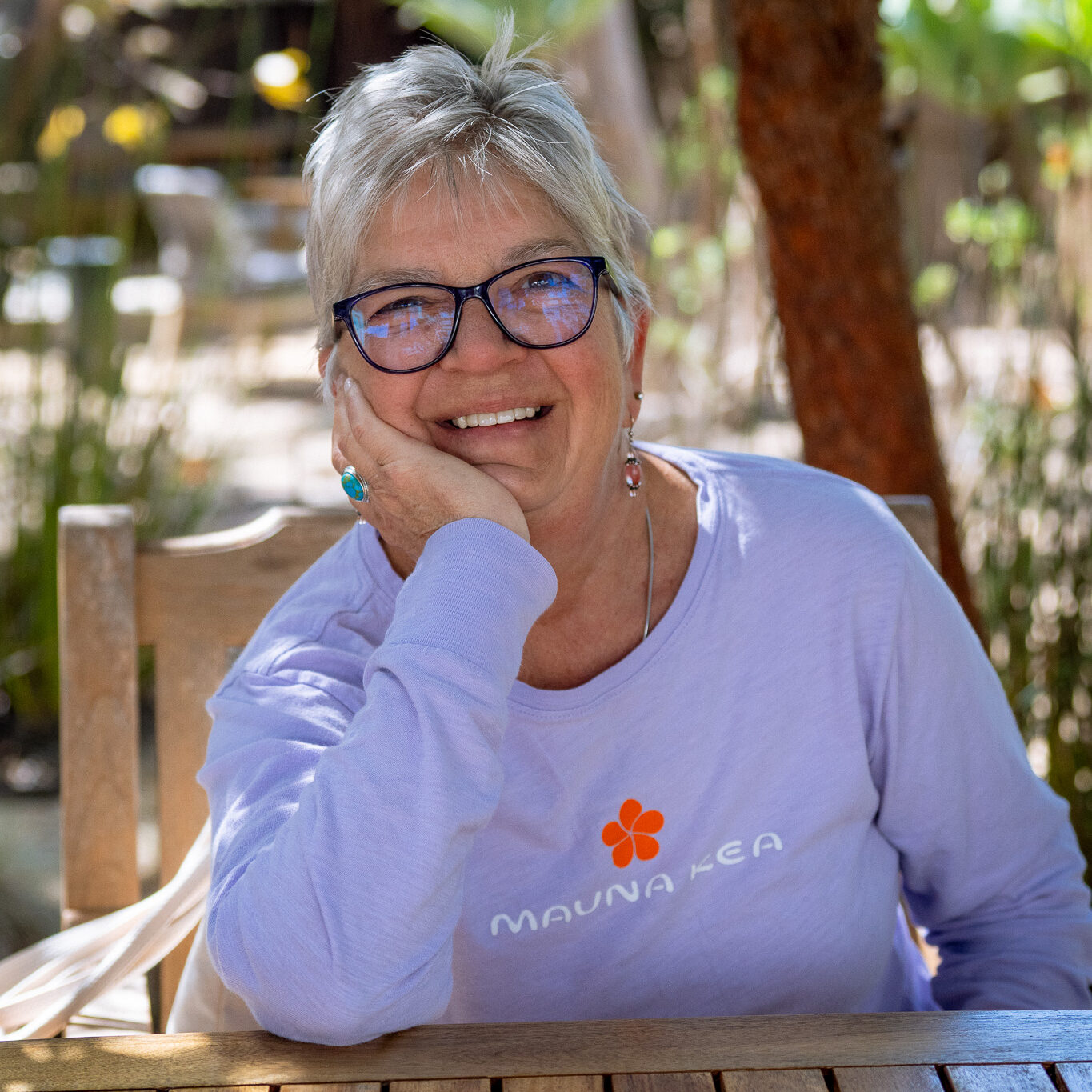
Karen is a WHY person.
Not why in the casual sense. Not the kind of why you ask when someone tells you the coffee machine is broken or there’s suddenly a mandatory meeting on the schedule. Karen wants the capital-letter WHY. The kind that comes with charts, bullet points, supporting documentation and, preferably, a laminated instruction manual.
“I’m a WHY person. I want to know the answers.”
After roughly fifty years of drinking, four DUIs, devastating loss, fractured relationships, and enough therapy to reasonably expect somebody to have produced a satisfactory answer by now, Karen has spent most of her life asking the same questions:
Why do I drink? Why can’t I stop? Why do I need to numb my feelings? Why did this happen to me?
Why, why, why?
Today, Karen describes herself simply: “A 63-year-old alcoholic who’s learned a shitload about myself, my addictive behavior, patterns, alcoholism, family dynamics, and how great it is to be sober.”
It took her a long time to get to that sentence. And an even longer time to understand the “why” behind it.
Karen was born in Jamaica in 1963, the daughter of Presbyterian missionaries. Her father was a Chaplain at a boarding school, and she remembers her early childhood as idyllic. Then, around ten, her family moved to Northern California. America was not Jamaica. Karen didn’t understand the culture. She didn’t dress right. She didn’t talk right. She didn’t feel like she belonged.
Then, at twelve, her childhood changed completely.
One rainy Sunday morning, Karen was walking to church carrying her sister’s clear bubble umbrella. She had recently seen Singin’ in the Rain, so naturally she was doing what any twelve-year-old with an umbrella and absolutely no concern for public embarrassment would do: walking along the curb, swinging it around and singing.
A man approached and asked if he could share her umbrella.
She agreed.
Moments later, Karen was being dragged into a parking lot behind a bank where she was then raped.
“I just remember looking back and seeing the umbrella swinging with the wind, in the rain. And that’s what I focused on.”
Karen walked the rest of the way to church that morning and told her father. Police were called. Her mother accompanied her to the hospital. And afterward, in one of those bizarre details that sounds almost fictional precisely because real life has absolutely no sense of appropriate timing, her mother took her home and taught her how to shave her legs.
Karen had been begging her to let her.
“Smooth legs, finally!”
Her mother also told her something Karen remembers decades later: not all men were like the man who hurt her. Somewhere, there was a good man for her.
Her parents consulted a family therapist and were advised to watch for obvious behavioral changes. If Karen wasn’t having nightmares or visibly falling apart, they were told not to push.
The problem was that Karen WAS changing.
She was just getting very good at making sure the adults didn’t see it.
She climbed out of windows. She smoked cigarettes and marijuana. She drank. She sought attention and validation in places a fifteen- or sixteen-year-old had no business having to search for either.
And somewhere in all of that, Karen discovered something that would become one of the great survival mechanisms of her life: compartmentalization.
Something terrible happens.
Put it in a box.
Close the lid.
Label it if necessary—Karen does appreciate organization—and proceed to the next item.
By her early twenties, Karen had moved to Southern California, where she eventually started working at Yankee Doodles, a pool hall in Long Beach. She began as a server and later bartended.
That is where she met Rich.
They knew within weeks that they would marry. They were barely 22 when they did, young enough to still be figuring themselves out while simultaneously attempting to build a life together.
And somehow, they did.
They had two children, whom they adored. Karen became the kind of mother who was deeply involved in their lives: soccer games, school activities, theater productions. She even rewrote Harry Potter for an elementary-school play.
Then came a Saturday morning in 2003.
Rich made a special breakfast for Karen and the kids before leaving for a motorcycle ride with friends. He made eggs benedict. Karen and the children were setting up a garage sale.
Rich left.
Then he came back. He had forgotten something to wear underneath his helmet because it was cold. He left again. Then he came back again. By this point, Karen was waiting for the shower to warm up. I’m like, ‘Are you kidding me?’” She threw her robe back on and went outside. “Now what?” Rich lifted his visor.
“I just want to tell you guys I love you.”
This time Karen softened. “It was sweet.”
He lowered his visor and rode away.
Those were the last words Rich ever spoke to his family.
A few hours later, Karen received a phone call from the friend riding with him.
There had been an accident. Get the kids. Come to the hospital. Immediately. The children were 9 and 12. For approximately 45 minutes, Karen drove toward the hospital while her kids asked questions no mother should ever have to answer without knowing whether the answer would destroy them. “Is Dad okay? Did he break his leg? What happened?”
Karen already suspected the truth.
When they arrived, a Chaplain was waiting outside.
“Fuck.” She thought.
Rich had been riding along a highway when he and his friend approached a stopped rural mail vehicle. Between the dirty rear of the vehicle and the shifting sunlight coming through the trees, they didn’t realize it had stopped until there was almost nowhere to go. His friend managed to swerve. Rich didn’t.
The motorcycle struck the back of the vehicle.
There are losses that divide a life into before and after.
For Karen and her children, this was one of them.
Before, Karen had been the mother writing school plays, making costumes and showing up. Afterward, grief quietly began dismantling her.
“The more I didn’t deal with the grief, the more I climbed into a bottle.”
The night Rich died, Karen sat outside, smoked an entire pack of cigarettes and drank an entire bottle of wine.
She had actually quit smoking shortly after meeting Rich. He had once informed her that kissing a smoker was like “licking the bottom of an ashtray.” Karen preferred kissing Rich, so cigarettes lost.
Then Rich was gone.
Now alcohol wasn’t social.
It was anesthesia.
Karen continued caring for her children in the most basic sense. There was food. There was shelter. Life kept technically functioning. But the mother who had once been immersed in their activities slowly disappeared beneath her own grief. Her children were grieving their father. Karen was grieving her husband.
And nobody in that house had been given an instruction manual for how to survive either one.
Within a year, Karen met Dave, the man who would eventually become her second husband. Looking back now, she understands how quickly everything must have happened from her children’s perspective.
“It must have felt like days since their dad died, and then I introduced this guy.”
That realization didn’t arrive immediately. It arrived in recovery.
For years, alcohol became Karen’s answer to questions she couldn’t answer any other way.
Her drinking escalated. There were four DUIs. Blackouts. Hiding bottles. Lying about how much she drank. Buying alcohol from different places so no single store would recognize exactly how much she was consuming.
That is addiction logic: completely irrational behavior executed with organizational precision. Meanwhile, life continued delivering more reasons to drink. Karen lost her father. She lost her mother. She watched a close friend die of cancer.
Then Dave, her second husband, was diagnosed with cancer himself.
As Dave’s drinking decreased because of his illness, Karen’s increased. Eventually, her relationship with her children deteriorated to the point that they kept their distance. Her youngest, Kelsey, would sometimes answer Karen’s calls, hear her voice, and immediately know. “Mom, why don’t you call me back when you haven’t had a drink?” Karen’s younger sister Connie became an enormous source of stability for the kids. For Karen, that distance eventually became harder to numb.
Then Kelsey met Mike. Her Fiancé.
Mike is in recovery himself, and he couldn’t quite understand why everyone seemed to have accepted that Karen was simply unreachable.
“Let me help your mom.” He would pester.
Kelsey was understandably less enthusiastic. She had spent years living with the consequences of her mother’s alcoholism. Hope is considerably less exciting when you’ve already watched it disappoint you repeatedly. Kelsey’s focus was on self-preservation.
Eventually, she gave her blessing for him to call Karen. He sent her information about Beit T’Shuvah. Karen reviewed it and responded with all the enthusiasm of someone being invited to her own execution. “A Jewish rehab in L.A. for six months? Fuck no.” Mike kept trying.
For months, Karen resisted. Then she met him in person. He hugged her.
“I can’t wait for you to be my mother-in-law.”
“Mother-in-law? What the fuck was this guy talking about?”
But underneath the sarcasm was something alcohol had been slowly stealing from Karen for years:
A future. A daughter’s wedding. Potential grandchildren. A husband battling cancer who needed a partner, not a “drunk caretaker.” Children she loved but barely knew anymore.
Karen finally understood that she could continue asking why she drank, or she could become willing to do something about it.
On April 15, she came to treatment, eternally gratefully because of Mike’s push.
And because Karen apparently doesn’t believe in doing anything halfway—including alcoholism—she decided that if she was going to do this, she was going to actually do it. Recovery gave her something years of asking questions had not. It gave her a way to examine her own part. The 12 Steps of Alcoholics Anonymous forced Karen to look beyond what had happened to her and examine how she had responded to it. That distinction mattered.
For the first time, someone essentially asked:
“Okay, Karen. We know what everyone else did. What did you do?”
“I had a part?”
Apparently, yes.
Rude.
But transformative.
Karen began understanding the patterns underneath her drinking: insecurity, fear, control, avoidance, the inability to communicate what she needed, and the lifelong instinct to shove painful experiences into neatly labeled boxes rather than actually feel them.
“I finally get the whys now.”
More importantly, she’s learning to let people live without trying to manage every detail around them. She’s learning how to communicate, how to stand up for herself, how to be honest with Dave, and how to repair relationships rather than control their outcomes.
And slowly, her children are coming back into her life.
Recently, Karen sat with Kelsey while she tried on wedding dresses. It was the kind of ordinary mother-daughter experience alcoholism had nearly cost her. Everyone had opinions about fabrics, designers, boning, silhouettes, and which dress was technically best. Karen eventually cut through all of it.
“It really doesn’t matter what dress you pick. It matters how YOU feel in it. If Kelsey felt beautiful, comfortable, and like herself, that was the dress.”
“Even my opinion doesn’t matter. Her opinion is what matters.”
For a woman who spent much of her life trying to control the variables, that’s no small sentence.
Karen is preparing to return home now. She has AA meetings lined up. A therapist. Marriage counseling. Plans for continued recovery.
Dave is still living with cancer, receiving infusions every two weeks. Karen knows their time together isn’t something she can control or organize into a neat checklist. She also knows she wants to actually be there for it.
They are hoping to move into a larger home where Karen can have a room for sewing and crafts—a therapeutic outlet long neglected.
There is something almost too perfect about that image.
For most of her life, Karen packed things away.
Trauma. Grief. Fear. Resentment. Questions.
Anything unfinished went into a box because unfinished things were uncomfortable. Recovery is teaching her that some things can remain unfinished.
There may never be a satisfying “why” for a twelve-year-old girl being raped behind a bank. There is no acceptable why for a nine and twelve-year-old losing their father on an ordinary Saturday morning after he came home one last time simply to say, “I love you.” There isn’t a why that makes any of that fair. Recovery hasn’t handed Karen a neat explanation for every terrible thing that happened to her.
Instead, it has changed the question.
It’s becoming a reason.
Her children. Her Family. The possibility of grandchildren. Showing up for Dave while she still has him. Creating instead of numbing.
Being present for a life she spent years trying not to feel.
Karen finally found her WHY.