
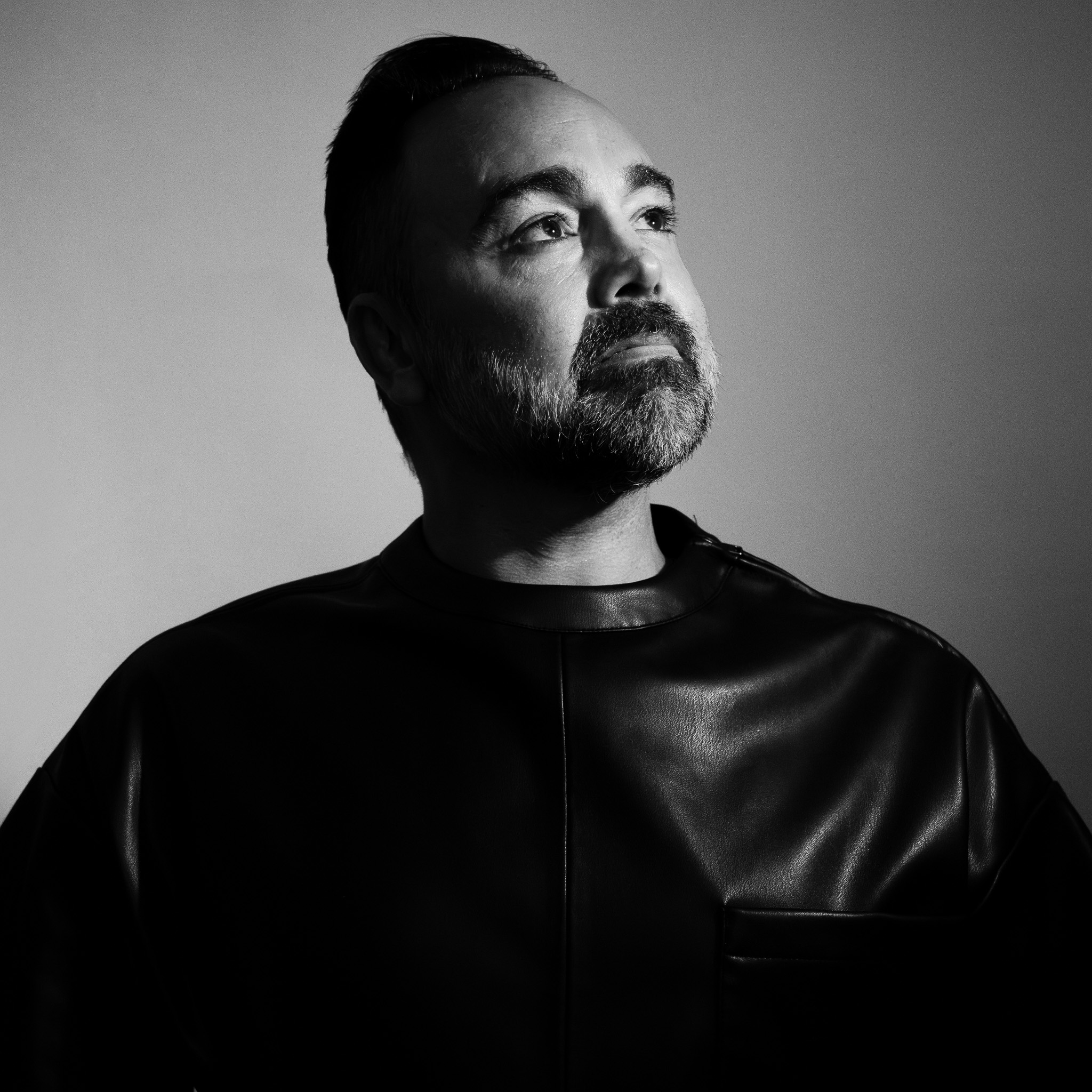
A prerequisite to walking into this building is having a hole in your soul. It might as well be a question they ask you in admissions. For all of us, that hole, that deep wound, has been filled with various odds and ends. Anything from drugs to sex to money. In the case of Jesse G., he filled himself with all three. His search for that missing piece, as Shel calls it, was never fruitful. It was never something he could purchase. Only something he could build himself (which any parent will tell you) is the best gift.
When you think of Reno, Nevada, you probably picture an old woman in a sequined dress and feathered hat, chain-smoking full-flavored cigarettes in the 120-degree desert heat. No? Just me? Well, apparently it’s not all slots and showgirls. There’s affluence, beauty, and nature that doesn’t get the same press as the grime. Between those two worlds is exactly where Jesse was born. Reno is misunderstood,” he says, describing instead a childhood of four real seasons, snow-skiing winters in the High Sierra and long summers with his father on a boat at Lake Tahoe. His mother and father were 19 when they had Jesse—still children themselves. By ten, he had already sat through three divorces stitched between his parents’ remarriages, had stood as ring bearer at two different weddings for two different households, a small tuxedoed witness to families that kept dissolving and reforming around him.
Jesse grew up too fast because the ground beneath him never held still. “I realized at a young age that as an adult, you could do what you wanted,” he says now, looking back on the boy he was. “It was power. No one could tell you what to do.” He did not want dolls or games; he wanted ledgers, envelopes, the seriousness of adult things. When grown-ups asked him to leave the room, he pressed his ear to the door, hungry to understand a world that never fully let him in.
Before he could form the words for it, Jesse knew he liked men. It started with how he looked at his elementary school teacher with attraction. And, of course, his obsession with Madonna. “My whole room was just plastered with Madonna posters. I mean, you can get one more on the wall. It was my whole life.” His stepmother danced as a showgirl in a Reno spectacle, and by eight he was the only child allowed backstage, watching gay men laugh and glitter in the wings of a world most children never glimpse. One of those men would become Jesse’s beloved dance teacher. He would later die from what the family called cancer, though years later, Jesse would come to learn it was AIDS. The Church offered him no shelter for any of this. Jesse went to Catholic school and was quick-tongued and defiant, needling the hypocrisies he saw in men who preached against a thing he suspected lived quietly in their own hearts. He once looked a priest in the eye during theology class and said, “Let me guess—it’s like 1950, and everyone’s asking you when you’re getting married like your brother Jim, and you don’t know what to say. So you put on that outfit, and everyone stops asking you questions.” The priest struck him for it. Middle school, he says plainly, “…was hell. I was teased a lot. They called me Jessica.” He hung out with a pack of girls, no guy friends at all. So, he tried football in high school, hoping its brutality and classic hetero-stigma might disguise him. He made it a season and a half before the uncomfortable feeling in the locker room became impossible to hide from. “Deep down, I wanted to be a cheerleader.” His coming out took place in a brothel. His father had taken him there, suspicious of his homosexuality. He had him go upstairs with one of the girls, and when he came down, with a less-than-pleased look on his face, his father confronted him about it. “The end result was that he said, ‘…as long as you’re happy.’” In the end, his dad had less prejudice than he did more worry for his son and the struggles he would face.
His parents always had one instruction for him: “Don’t get into cars with strangers.” So, that’s exactly what Jesse did. By thirteen, he was already climbing into the cars of men decades older than himself, strangers who slowed at the curb and looked at him a certain way. Something in him—starved, unmoored, already fluent in being whoever a room required—climbed in beside them. At the time, he could not recognize it, but he was 13…just a boy—just a child. These were, by no other name, pedophiles.
The first taste of alcohol came at twelve or thirteen, and by fourteen he was pouring wine from a box hidden in an empty school locker, playing bartender to his own adolescence and never once getting caught. By 16, he had discovered where his family’s money had come from: his father was a pot grower who was the head of a large organization of dealers throughout the state. Big-time stuff. So, naturally, Jesse started stealing a bit here and a bit there—selling to local kids…starting a sub-organization of his own. That same year came the Audi. Spring break in France. Ski weekends. Five thousand dollars in cash walked into a tuition office because that was simply how the family conducted itself. No one ever called it what it plainly was: a father trying to caulk, with money, the exact-shaped hole Jesse’s mother had left when she vanished into her cocaine addiction. His father and his two stepdads made sure Jesse and his half-siblings stayed close. They are still close to this day. Jesse expresses incredible gratitude for that. He also expresses deep gratitude for his mom, whom he described as a loving inspiration. Today, she is 21 years sober, and they are closer than ever. “We’re like this,” he said as he intertwined his fingers to the point of near breakage.
For Jesse, his drug road was just kicking off. Meth found him at sixteen, back when it still wore the rougher name of crank. From the first hit, he was hooked. Because of his attendance and commitment, he was not meant to graduate high school; the credits weren’t there. But money smoothed every obstacle, and he walked across that stage anyway, unprepared for the next stage. When he got to college, he was hit with a ton of bricks. He wasn’t ready. So, San Francisco called to him, a fake ID tucked in his overflowing wallet, and the first time he stepped onto a dance floor beneath its flashing lights, something in him recognized the room. “This is me,” he thought. “This is where I arrived.” He did not yet know how much of himself he would have to lose there before he ever found his way home. Amid the gold rush of the dot-com years, that the hunger became a wildfire. He worked the finest restaurants by day and burned through the finest methamphetamine at night, surrounded by people whose money made his unraveling look, for a while, like simply keeping up. Eventually the drug took even that. He stopped working entirely. It was his friends—the ones who went to Burning Man and did all the drugs you’d expect from that crowd, sans meth—who finally staged the intervention that sent him fleeing to his aunt’s house at Lake Tahoe. He had barely unpacked before he fell into the arms of an older, wealthy man, whom he quickly engaged, swept back into a familiar architecture of Mercedes and boats and eight-balls of cocaine a day. But eventually even the beauty ached.
It was in that gilded, poisoned relationship that the wreckage finally became undeniable. In a Halloween blackout of Xanax, cocaine, and drink, he filled his car with a hundred stolen pumpkins from a grocery lot, so many the trunk wouldn’t close, and drove off with them tumbling out behind him onto the highway. The cops followed his sloshed orange pumpkin trail and arrested him. His photograph ran in the local paper beside a headline that called him “The Pumpkin Pilfer.” His own explanation to police was, absurdly and almost movingly, that he had only meant to pass the pumpkins out to the poor. His grandparents intervened and delivered him to his first rehabilitation. When he left, he stole a car from a car dealership and drove it with abandon. Truly, he had no inkling he was going to get caught. Of course he did. He led police on a high-speed chase that ended with the vehicle flipped on its side and Jesse, for the first time, behind actual bars. A judge who took an unaccountable liking to him sent him instead to a long-term men’s program in San Francisco, where he stayed eleven months, his longest stretch of sobriety yet, until a roommate taught him to skim credit cards, and the old hunger for money and control found a fresh, more dangerous outlet.
What followed were years he still struggles to hold whole in his memory. The fraud metastasized from a private vice into a serious criminal enterprise, one that eventually delivered him to San Quentin for three years. He emerged only to fall for a boyfriend running an even larger fraud operation. Together they watched federal agents close in around them. His boyfriend was eventually killed by the FBI. Jesse spent months afterward so consumed by fear of the agents still circling him. This is one of the rare occasions where someone is on meth, was in psychosis, and the FBI was ACTUALLY following them. So, he committed himself to a psychiatric hold simply to reach somewhere they could not follow.
This was Jesse’s life, though. In and out of institutions and on and off of substances. He went to the fanciest private-pay rehabs—expensive places that offered him nothing. Jesse even found himself body-brokered. And then, in the middle of all that ruin, came a friend named Ivan—unimpressed by any of Jesse’s old machinery, immune to the charm that had opened every other door. One evening Ivan discovered a fish that Jesse had brought to his home from the grocery store. It was eighty dollars of sea bass lifted without paying, and simply refused to touch it. “We’re not eating this fish. It’s stolen. You have to take it back.” It cracked something open in him that nothing ever had. “When you do these things,” Ivan told him, “you’re blocking your own blessings.” It was the first time in years anyone had asked Jesse to be honest rather than impressive.
Even that reckoning did not end things cleanly; few reckonings do. There was a move to Portland with Ivan, a real job at last after a decade without one, a relapse, a DUI, five more rehabilitations that each promised, and each failed, to be the one that finally held. By the autumn of 2025, worn down to almost nothing, he found himself on the phone describing a place he had only heard of secondhand. He said to his friend, “For some reason, my intuition, I can’t stop thinking about this place.” A keen reader is probably ahead of me on this one. That place was Beit T’Shuvah. And after a call with alternative sentencing, like a prayer, he was home.
Oftentimes when people get to Beit T’Shuvah, they have nothing. A garbage bag or a single pair of underwear. Jesse arrived with far too many suitcases, and within the hour a PF gently told him that it was time to begin letting go. He remembers thinking, almost defensively, “Well, none of my clothes are used really—they’re all pretty new, and I like all of them.” He gave them away anyway—knowing that, by doing it, he was staying. He wept in the hallway, undone by a kindness he hadn’t braced himself to receive with his first steps in the building. His roommate that first night, a seventy-year-old straight Jewish man named Steve, would become one of the truest friendships of his life. The two of them plan to live together once the program ends—re-enacting their own odd-couple situation. “I actually have friends today. I have friends that I made here, that I can count on and that are there.”
When he got here, everything was new. It was unlike the other work he’d done. Suddenly, he was, like a virgin to treatment, relearning everything he thought he once knew. The real work Jesse has done here has had almost nothing to do with staying clean, and everything to do with looking, without flinching, at the man the drugs had let him become. “Going back and looking at the abuse that I did—recognizing that I was an abuser—was a huge part of that.” These are the truths that are harder to accept than any arrests. They are arrests of the soul, and we are the only ones who can put the cuffs on. Jesse is going through the steps with a sponsor that he loves. “He has a past like me.” In Rabbi Iggy and Rabbi Jade, he found a faith he had never known before—not a religion of certainties and closed doors, but one that let him keep asking the unanswerable questions. Not to mention the fact that he is being taught by openly queer clergymen—a stark contrast to his youth. He stood inside this year’s Pride Shabbat and felt something rare settle over him. “I’ve always been proud of who I am, of being gay because gay people make the world go around, in a way. Without them, it would be such a dull place.”
Jesse has gone back to school, diving into classes he never expected to. Something else he never saw himself doing is being a temple intern. But he loves—for all the right reasons. The service. The community. Frankly, the humility being an intern can bring. His outlook on it all is something I admire. That’s because that is who Jesse is: kind, loving, attentive, and generous. If you’ve seen him around here, you’ve felt the energy in the room shift. If you’ve crossed his path, you’re probably friends with him by now—it’s nearly impossible not to be. Lovable is an understatement. As he puts it: “Sinners make the best saints.” After four decades of being bought, rescued, re-arrested, and relocated—after running after every bit of glittered gold a desperate boy could think to chase—the one place he ever walked into on his own two feet is the only one that has ever felt like home. His missing piece.