
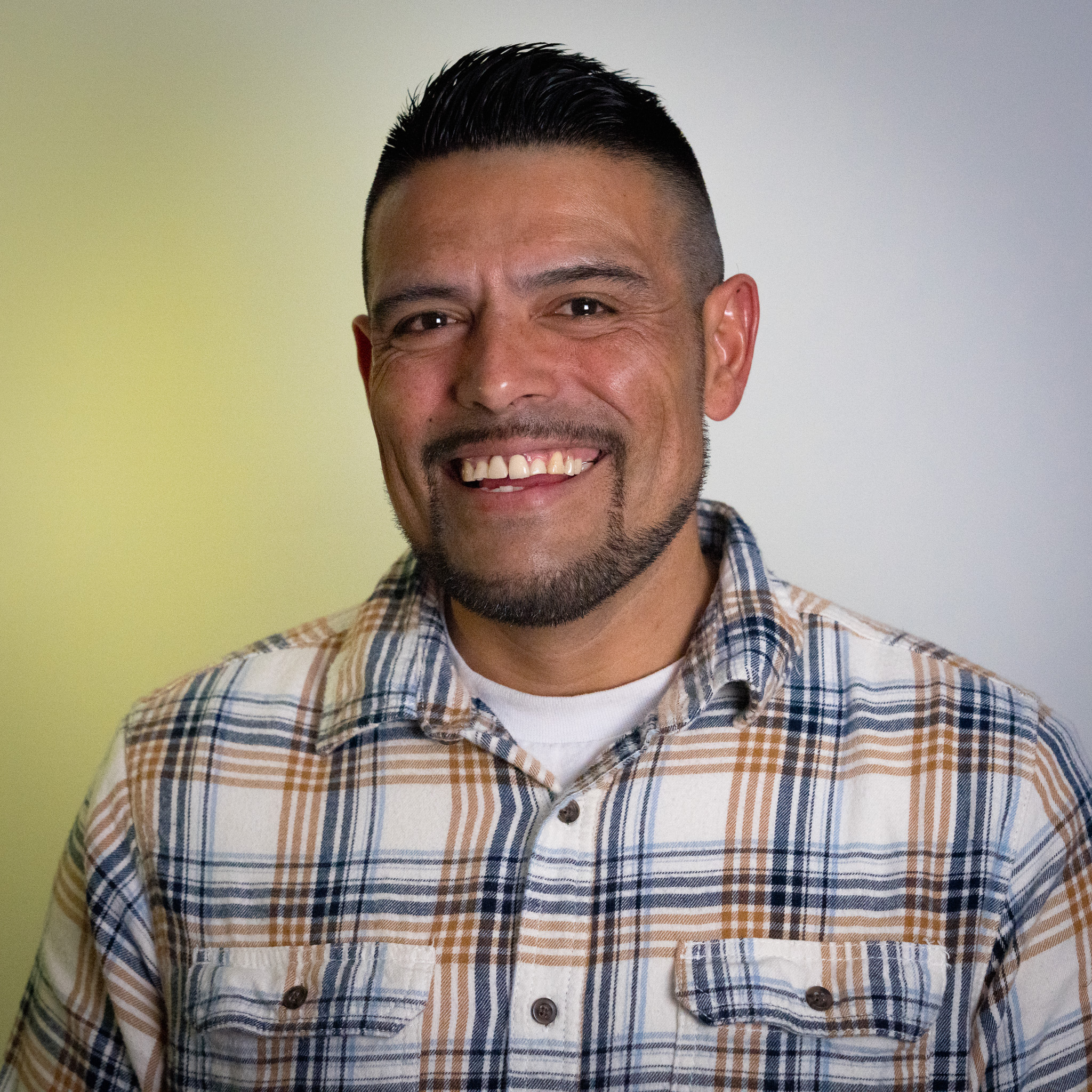
After a lifetime of violence, addiction, and unimaginable loss, Jason C. is learning to
turn survival into service.
When Jason C. is asked who he is, he does not begin with his name and age.
“I’m a survivor.”
It is difficult to argue with him.
Jason has survived childhood abuse, abandonment, homelessness, gang violence, juvenile
hall, shootings, stabbings, drug trafficking, heroin addiction, and eleven overdoses. Four
times, he was legally dead. But surviving is not the same thing as living, and Jason knows
that better than most.
Today, he is a resident at Beit T’Shuvah, working as a Program Facilitator intern with the clinical department and putting in the hours toward becoming a permanent staff member. The man who once dealt drugs and carried guns now spends his days supporting other residents. The man who learned as a child to suffer silently is learning how to sit with other people in their suffering.
For Jason, redemption has not arrived through one dramatic moment. It has arrived
gradually: in his relationship with his daughters, his loyalty to his twin brother, his
willingness to confront shame and his choice to become the kind of person his first daughter,
Daniella, taught him to be.
Jason described himself as a “very fearful, scared child.” His father was a violent alcoholic.
His mother struggled with addiction and left when Jason and his twin brother, Matt, were
three years old. After that, the chaos inside the home intensified.
Jason remembers his father coming home from work and destroying the house before
beating Jason, Matt, and their mother. Sometimes, he says, they were beaten unconscious.
Other times, his father returned home covered in blood and made the boys help burn his
clothing. “It was definitely his world,” Jason says. “So we just lived in it, quietly.”
When his father went to prison, Jason and Matt were sent to live with relatives. They stayed
with their grandparents for a time, but their aunt, who had schizophrenia, was also living in
the home. Jason remembers one summer day when she placed the four-year-old twins in
several layers of winter clothing, locked them inside a hot car, and said she was going to
“sweat the demons” out of them. Police broke the window and pulled them from the vehicle.
After that, Jason and Matt began what he calls “the tour.”
Their father had seven older sisters, and the boys moved from one aunt’s home to another,
rarely staying anywhere long enough to feel settled. Jason attended multiple schools and constantly felt like unwanted company. The only permanent thing in his life was Matt. The
twins became intensely dependent on one another. They were brothers, best friends and, in
many ways, each other’s only stable family.
Jason did not fully understand how abnormal his childhood had been until fifth grade, when
he and Matt spent the night at a friend’s house. The family sat together at the kitchen table
and ate dinner. That ordinary moment stunned him.
“I realized that what was going on at our house was not normal.”
For some children, a family dinner is forgettable. For Jason, it was evidence that another
kind of life existed.
Jason was introduced to the gang he would eventually join at eleven years old. What
attracted him was the promise of belonging. “It was a distorted sense of family,” he says. “But at the time, it felt like they loved me. I just wanted to be loved and cared for and looked
after.”
At twelve, Jason and an older friend were in a stolen car when someone opened fire. Jason took cover, but his seventeen-year-old friend, Andrew, was shot multiple times.
Jason held him as he died.
Jason considered running when police arrived, but could not pull himself away from his
friend. Because the car was stolen, Jason was sent to juvenile hall for a year. It was the first time he remembers praying.
He sat on his bed and asked God for help, then thought, “God is so far away that He can’t hear me.”
After his release, a childhood friend invited him to church. During the youth service, the
pastor abruptly stopped speaking and asked whether someone named Jason was present.
The pastor looked at him and said that “God wanted him to know that when he had been
sitting on that bed believing God was far away, God had been sitting beside him.” Jason had
never met the pastor. “It rattled me,” Jason says with wide eyes. It was his first experience of
believing that something—or someone—might still be watching over him.
As a teenager, Jason found another form of escape: music. He played drums, wrote songs
and joined bands. Music pulled him partially away from the streets, although not completely.
By fourteen or fifteen, he was selling drugs and becoming connected to people associated
with organized crime. He lived two lives: musician on the weekends, gang member and drug
dealer during the week.
At sixteen, another defining moment arrived when Jason’s twin brother came out as gay at
the family’s kitchen table. Their father responded immediately. “Not in my house.” He threw
Matt out. Jason stood up and began packing too. Jason told his father, “If he’s not allowed in your house, then I’m not allowed in your house either.” Their father threw them both out.
Jason found an unused concrete trash enclosure, put carpet inside it, and made it their home.
He graduated from high school while living there. It was not exactly campus housing, but
Jason made it work.
Once he turned eighteen, he found a room to rent. He attended community college,
transferred to Cal Poly and earned an associate degree. He found steady work with an
electrical company and gradually improved his living situation into an apartment.
But beneath the achievements, the criminal life continued.
Jason says he reached a point in drug trafficking where he could not simply resign with two
weeks’ notice and a polite email to human resources. He was selling primarily to other
dealers and moving methamphetamine, heroin, ecstasy, and prescription pills. He was also
involved with guns. At the same time, he began using more heavily himself.
Jason met Diana, the mother of his first daughter, at a rundown bar. Before Jason’s band
took the stage, someone threw a Jack Daniel’s bottle across the room and struck him in the
head. He fell, bleeding. Diana approached him and offered to take him to the hospital but
didn’t have a car. Isn’t it the thought that counts? Jason played the show while bleeding, then
drove himself to the hospital with Diana beside him. “Super punk rock.” Afterward, he
invited her back to his house. She never left.
Diana accepted Jason as he was. She loved Matt. She became his partner, best friend, and
constant companion. Years later, Diana suddenly stopped getting high. Jason noticed eventually—but not immediately. Seven months into her sobriety, Jason commented that she appeared to be gaining weight.
Diana finally told him the truth, “I’m pregnant. I’m seven months pregnant.”
Jason had apparently missed several subtle clues, including Diana repeatedly watching the
movie Juno. He assumed it was simply her favorite film. But the moment he learned he was
going to become a father, Jason stopped using.
He had never attended AA and knew nothing about treatment. He believed rehabilitation
programs were inaccessible to people like him. “I thought rehabs were for rich white
people,” he shrugs. So he quit cold turkey.
Their daughter, Daniella, was born on May 12.
“The moment she was born, I realized I couldn’t be living this double life,” Jason says. “I was
either going to choose my family, or I was going to choose to be the gang-member drug
dealer. Those two things couldn’t coexist.”
Jason approached the man he worked for and asked permission to leave the drug business.
He genuinely believed he might be killed for asking. Instead, he was given a brown paper
bag containing $50,000 and told that if he ever began purchasing large amounts of drugs again, he would be expected to return to work. Jason also agreed to complete several
remaining firearms transactions before being fully released. As Jason prepared to leave the meeting, the man tossed something toward him. Jason caught
it. When he opened his hand, he saw the severed tip of someone’s finger. The message was
subtle only by cartel standards.
Jason went home and began his life as a father. For the next several years, Jason says, life
became “real normal, real quick.” He worked as an electrician. The family purchased a
three-bedroom house. They had a boat, an RV, dirt bikes, you name it. They took trips to the
dunes, the lake, and Glamis. Jason worked constantly and believed he was giving his
daughter everything he had never received.
“I remember this being probably one of the happiest times of my life,” he says. “I
felt like I had purged my whole self of everything that was destructive.”
Jason went to work one morning. Shortly after arriving, his boss told him to pack his tools and call his father. There had been an emergency. Jason called. His father told him there had been an accident and instructed him to come to the hospital.
Jason does not remember driving there.
He remembers parking outside the emergency room and seeing his father standing near the
doors. His father had a look on his face Jason had never seen before. “It was the first time
that I saw my dad sad.”
His father told him that his four-year-old daughter had died and that her mother was in a coma. They had been struck by a drunk driver. Daniella was killed instantly.
Jason was told he needed to identify his daughter’s body. Hospital employees took him
downstairs to the morgue. Daniella was lying on a metal table. He remembers seeing blood
around her face.
Then he blacked out.
His father later told him that six security guards were needed to pull Jason away from his
daughter’s body. Three days later, Diana woke from her coma. Jason had to be the one to tell her that their daughter was dead. Jason and Diana returned home and began planning Daniella’s funeral. Two weeks later, Jason went back to work. When he arrived home one evening, the house was dark, and the front door was left open. He called Diana’s name, but she did not respond. The landline phone in the kitchen had been left off the hook. Jason walked through the dark house, reached the kitchen, and turned on the light.
Diana was on the floor in front of the stove. She had cut her wrists with a butcher knife.
Jason carried her to his truck and drove her to the hospital. Doctors saved her life.
A short time later, he returned from the grocery store and found her lying unresponsive on
the couch, surrounded by empty pill containers. She had taken every pill in the house. Again,
Jason rushed her to the hospital. This time, she was placed in a psychiatric unit.
When Jason visited, exhausted and overwhelmed, he asked why she was doing this to him.
They had already lost Daniella. Diana gave him an answer he has never forgotten:
“Don’t you get it?” she said. “I died in the car with her that day.”
Jason understood then that no matter how hard he might try, he would not reach her.
Three months after Daniella’s death, Diana died by suicide. She hanged herself in the
bathroom of their home using Jason’s belt.
Jason sold the house, the boat, the recreational vehicles, and nearly everything associated
with the life they had built together. Then he returned to drugs. Jason moved into his former condo with approximately $480,000 from selling the house. For the next eight years, he says, he largely remained inside using heroin and alcohol. He stopped working. He became severely addicted to intravenous heroin. He overdosed eleven times. On four occasions, he was pronounced legally dead. He was not searching for recreation. He was trying not to feel. “I just couldn’t get up,” he says. After his most recent overdose, Jason woke in a hospital coughing. A nurse turned toward a doctor and said, “He’s alive!” The medical staff believed he had died. Then Jason’s younger sister entered the room. She told him the family had already lost Daniella and Diana. Now they were losing him too.
“Can you just hurry up and fucking die so we don’t have to do this anymore?” she
said. The words were brutal, but they reached him.
Jason realized that everyone he loved was trapped on what he calls “this crazy rollercoaster” he had created. “It wasn’t fair,” he said, with tears welling up in his eyes.
He entered treatment for the first time and remained sober for five and a half years. During that period, Jason met his partner, Toni, who had a young daughter named Serenity. Later, Toni became pregnant, and they had another daughter, Nevaeh. But becoming a father again brought unexpected guilt. Jason loved his new family, yet part of him felt ashamed for continuing to live, love, and parent after Daniella’s death. He relapsed first on alcohol, then returned to drugs. His addiction worsened, eventually bringing him to Beit T’Shuvah for the first time. He stayed sixty days and returned home, but within months, he was using again.
This time at BTS, Jason says, things are different. He is not pretending that functioning is the
same as being well. The hardest thing he has had to forgive himself for is being absent from
his children’s lives—“not holding it together.” Recovery has forced him to face the years
addiction stole without letting the guilt steal whatever comes next. He cannot rewrite the father he was then, but he can decide who the father he is today.
Jason’s relationship with his brother Matt, who is also a BTS Alum, remains one of the clearest examples of his loyalty. Jason describes being an ally as allowing people “to be who they truly are, unapologetically and without having to hide.” “I love him unconditionally,” Jason says.
Considering everything Jason has experienced, his gentleness can be surprising. He is
known at BTS for being kind and accepting. When asked how he can remain kind after a
lifetime of violence, grief, and abandonment, his answer is simple… “Because that’s what
people deserve. Sometimes people don’t know they deserve it.” Jason believes
people have already suffered enough. He also believes his experiences have given him an
unusual ability to connect with others. There are not many categories of pain that feel
completely foreign to him.
“I think God does everything for a reason. Everything I’ve been through is so
that I have this uncanny ability to connect with pretty much anybody.” That ability is now
being turned toward service. The same life that once taught him to identify danger,
conceal emotions, and survive violent environments is being repurposed.
There are people who learn recovery through textbooks. Jason learned portions of it on
pavement, in juvenile hall, in hospital rooms, and inside morgues. He can now use that knowledge to help someone else remain present.
Near the end of our interview, I asked Jason what kind of man Daniella would want him to
become. He answers by telling a story about a toy:
Daniella had asked for a specific toy one day. Jason told her that if she behaved all week, he
would buy it for her on Friday. “She was more behaved than she normally was,” he
laughed. “She was perfect.” Jason bought the toy. Daniella was thrilled.
Then, on Sunday, Jason came home from work and saw the toy still sitting unopened in its
box. He didn’t understand. He called Daniella into the room and asked why she had begged
for the toy all week only to leave it untouched.
Her answer permanently changed him.
“Oh no, Dad,” she said. “I have a lot of toys. But Jessica at school has no toys to play with.”
Daniella had never wanted the toy for herself. She wanted it for another little girl.
“That was who she was,” Jason says. “That’s how she loved people.”
Daniella had already understood something her father had spent years chasing: possessions
are not love, money is not presence, and the value of what we have is measured partly by
what we are willing to give away.
“I want to be the person that Daniella was,” Jason says. “That’s who I try to be.”
This does not make his story neat. There is no sentence capable of tying a bow around the
death of a child. Redemption does not mean the suffering was necessary, good, or worth it. It
means the suffering will not be allowed to produce more suffering.
Jason began the interview by calling himself a survivor.
That is true. But survival may no longer be the most important thing about him. The more
important thing is what he is choosing to do with the life that he survived.
He is taking everything life has handed him—the grief, the shame, the violence, the
addiction and the second chances—trying to turn it into something that might help
somebody else.
In that sense, Daniella is still teaching him.
And Jason is finally becoming the man she already knew he could be.