
Written by Jill Leevan Rosenberg, LCSW
Rick M., a retired Hollywood writer, volunteers his time working with residents in our “Writing in Recovery” group at Beit T’Shuvah. Community members, much like our board members, are mostly those whose lives have been touched by addiction. As a non-profit, much of our funding is a result of our annual fundraising Gala, supported by these community members.
Home to over 100 residents, Beit T’Shuvah offers a six-month program where people find healing from substance use, gambling addictions, and dual-diagnosis challenges, with treatment that addresses both mental health and sobriety.
Recently, residents were asked to write about how addiction has affected their families. One client wrote: “Addiction took the joy and life from both me and my family. My family has never looked at me the same… On the other hand, it has brought my family together.” Another said: “Addiction has torn my family apart in ways that seem cruel and unusual. It also brought us all back together in ways that help us all see the magnitude of love, empathy, and understanding.”
Those two reflections, side by side, tell the story. Addiction doesn’t just live in the addict—it spreads. It’s insidious. It changes how people see one another, how they trust, and how they love.
Our residents describe how, during their addiction, they may have been physically present for their children and families, but absent in spirit. They talk about lying to loved ones, asking for money, and using conversations as opportunities to feed their addiction rather than their relationships. Many speak with shame about missing birthdays or holidays, pawning family jewelry, or stealing from a grandparent.
A 46-year-old man with a master’s degree in education wrote: “Promises and trust have been shattered again and again. It’s like having to glue back together the mirror my family sees me in. And the sad part is, I don’t even recognize the reflection myself.” That image of the shattered mirror is powerful—how someone can live in a family and yet remain unrecognized, even to themselves.
A 38-year-old man reflected on his relapse after a previous rehab: “I was fresh out of the program last time. I got an apartment, and my wife was pregnant. I decided to get a six-pack.” Others write about the pain of court dates, custody battles, and the fear of losing a child. Many describe families who now view them with suspicion or disappointment after years of broken trust.
BEIT T’SHUVAH (BTS)
Beit T’Shuvah is more than a Jewish rehab—it’s a community that brings together. Some come from backgrounds of privilege, where family support was expressed through money or transactional relationships. Others come directly from prison, carrying the cause of estrangement and doubts about whether reconciliation is a possibility.
One client, wrongly accused and imprisoned at the age of 19 and ended up spending the next 28 years behind bars, came to Beit T’Shuvah after his release. While living here, he worked full-time at the BTS Thrift Store and recently left the state to be with his girlfriend. As a resident, he attended our 3-day Family Immersion, where he finally began the process of healing a long-held misunderstanding with his mother that they had never addressed.
These stories make it clear: addiction might live inside one person’s body, but the whole family suffers. Addiction is often called a family disease because both the addict and the family go through parallel struggles. The addict denies, and so does the family. The addict feels powerless over the substance, and the family feels powerless over the addict. Both experience anxiety, despair, and longing for change.
Parents sometimes say, “I can only be as happy as my most unhappy child.” That’s addiction’s reach—impacting all who are near it. Addiction may start with one person, but it touches everyone. That’s why recovery must be a family process, too. Sometimes that family is the one we are born into. Other times, it’s the one we build here at Beit T’Shuvah—a long-term substance abuse treatment center where we heal broken souls.
FAMILY IN COMMUNITY AT BEIT T’SHUVAH
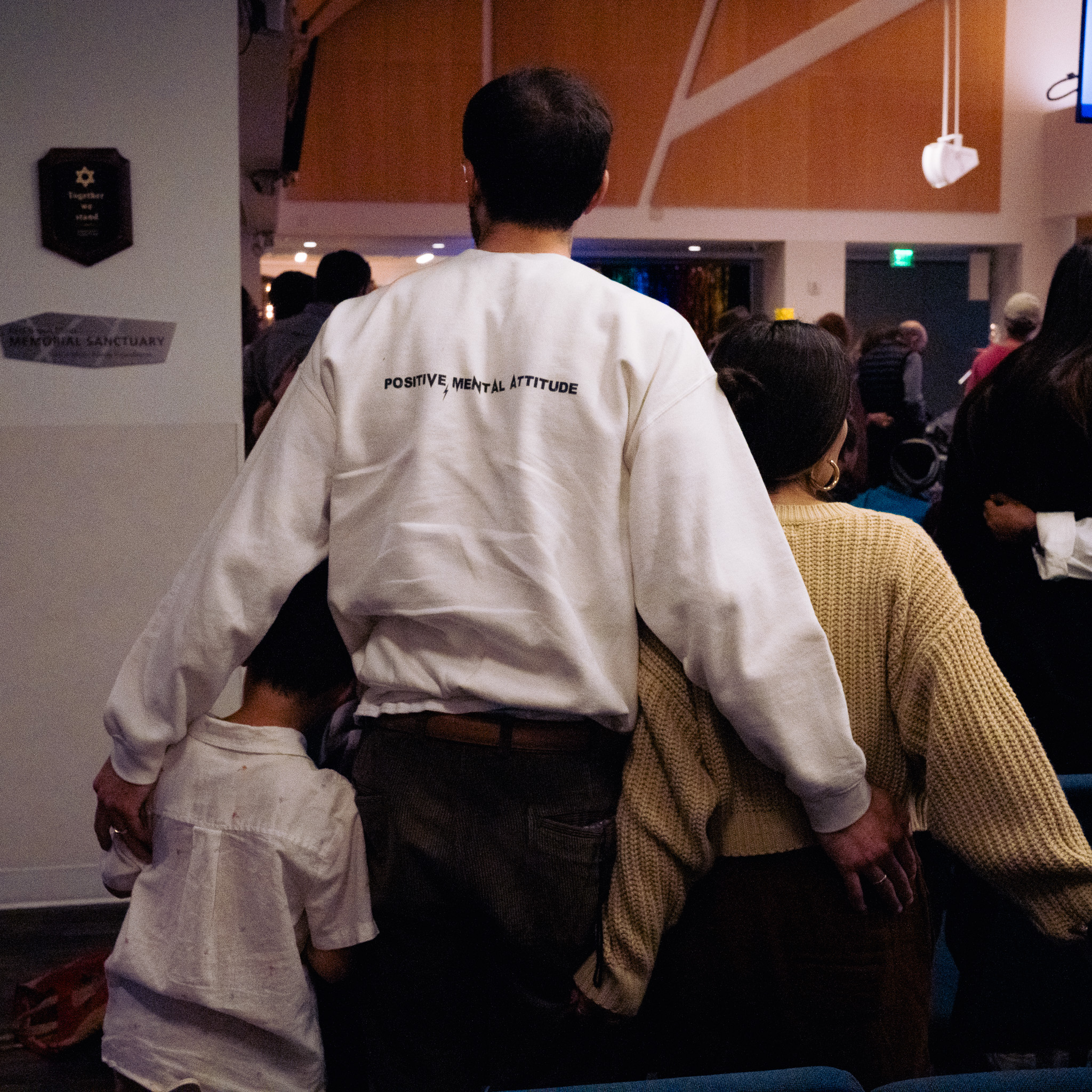
In community, in recovery, we find new ways to relate. At Beit T’Shuvah, people rebuild trust, practice honesty, and discover that healing isn’t something you do alone.
And in those small but significant moments, standing in the med line or food line, Shabbat at the beach, a walk to Trader Joe’s, asking someone if they are new, never completely sure if the new, fresh face is an incoming resident or at least one of ten of our annual therapy practicum internships. “Ice Cream Socials” or playing a game of chess (a new trend I’m noticing!), or simply someone willing to listen—we see that recovery isn’t just about abstaining from substances. It’s about returning to the people we love, to the lives we’ve neglected, and to ourselves. Everyone arrives carrying a history, a story, and a longing for connection, and the possibility of healing and repairing their broken spirit.