
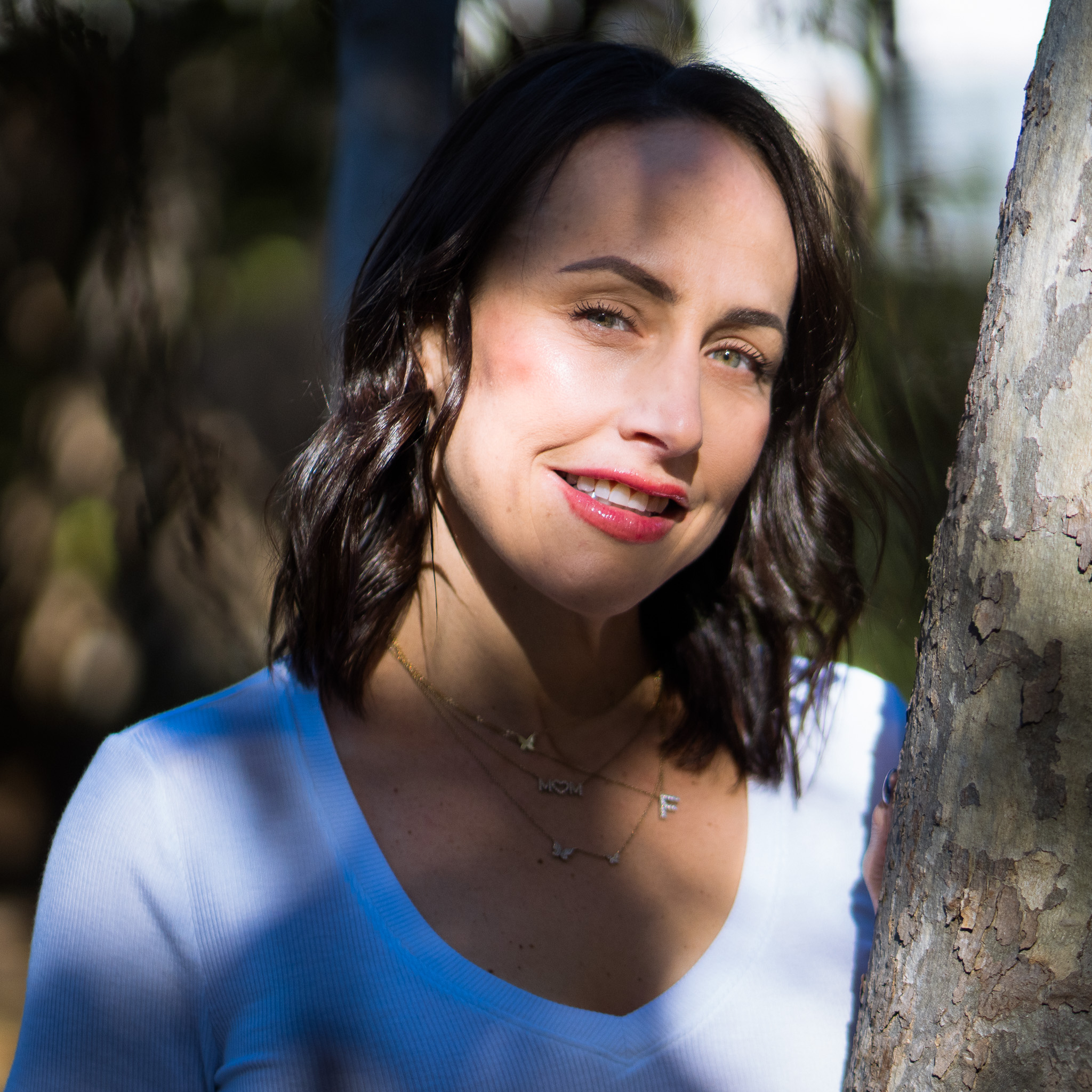
The outstretching fingers of drugs have a habit of finding their path to just about anyone, anytime, and anywhere, and through various camouflaged modalities. Drugs do not judge and find a potential victim in any intrigued user. More often than not, they plant their seed disguised as entertainment, medicine, or relief—providing some sense of normalcy, belonging, or a conceptual baseline consistency. Over time, this illusion, more often than not, spirals into full-scale addiction, and things very quickly become far from normal.
Stacey G. has had a unique relationship with stimulants since a young age. The fundamental years her brain was developing, between ages 10-21, she had been prescribed a high dose of Adderall. She grew up in the delusion that her baseline “normal” was supposed to be wired. How is one to know what normal feels like when normal has always been a pill? Normal can’t be drastically altering your brain chemistry…can it? Something that has been driving depleting dopamine rushes and getting you high before you even knew or cared what the concept of high even was? It’s a confusing kind of way to begin to exist in the world, and Stacey is finally unraveling the complexities of a brain chemistry skewed by the effects stimulants have had throughout her life. “I would never put a kid on that now,” she says, “those are your developmental years, and I was on copious amounts of uppers. That became the status quo. If I wasn’t wired, I felt like something was wrong.”
Stacey grew up in Encino, the oldest of three in what most people would call an ideal Valley childhood: private schools, family vacations, a car at sixteen. Her mother was—and still is—the rock of the family: loving, steady, present. Her father, a successful dentist and oral surgeon, was also a functioning drug addict. As she got older, she began to notice the pattern: the never-ending prescription bottles, her own meds mysteriously thinning out. “He dropped dead 13 years ago,” she says quietly. “We didn’t do an autopsy, but we know it was from drugs.”
Often wrestling with the dissonance of that background, “I feel kind of bad,” she admits, “I had such a privileged childhood. My ex-husband grew up in poverty, selling drugs to survive—that sounds like someone who should be an addict. I had everything handed to me. So it wasn’t about ‘I had it so hard.’ It was more like: you had everything, and you still ended up an addict.” Over time, she’s come to see addiction not as a simple morality tale, but as a tangle of genetics, chemistry, and timing—the invisible ways early prescriptions can bend a life off-course.
Stacey did what a lot of bright, charismatic kids do: she channeled her energy into performance. She went to UCSB, earned a BFA in Theater. Degree in hand, with no idea what comes next, she stepped back into the world she knew—fashion retail. Saks led to Fred Segal, which led to private clients with walk-in closets the size of small apartments.
“I was very good at what I did,” she says, “there is an art to it. But it was a very phony world. It was all about looks, validation, and image.”
Meanwhile, the “medicine” that had followed her since childhood was quietly shape-shifting, “I didn’t know I was an addict until I was about 23, but the amount I was prescribed was insane.” Four 30 milligram Adderall a day. That’s 3,600 milligrams a month…and sometimes, she’d double that dose. “One pill made me feel ‘balanced,’ and I hated that feeling. I quickly learned what extra would do to me. And I always had benzos to level me out.”
At 29, life took a surreal game-show turn. Literally. Stacey went on the Game Show Network’s Catch 21 and walked off with the maximum prize: $26,000. Her mom beamed from the audience as she held up the giant check. With that money, Stacey decided to pivot toward something that felt more meaningful. She wanted to become a nurse. Her father had other ideas, “‘No, you’ve got to do ultra-sound,’” she remembers him insisting.” Wanting his approval, she followed his lead and enrolled in an ultrasound program, completed two and a half years of school, and an externship at Glendale Adventist. This is where she met her ex-husband.
Her ex-husband came from a completely different world—his mother a live-in housekeeper, his childhood stitched together by scarcity and hustle. He was kind, steady, and exactly what Stacey needed as her father’s mental health unraveled under the weight of his own addiction. He proposed at the Grand Canyon, in the kind of sweeping, cinematic moment some people spend their lives hoping for. Stacey remembers only one thing: the pit in her stomach, “I knew when he proposed that I didn’t want to marry him, but what do you do? You’re at the Grand Canyon, it’s beautiful, he already asked your parents. And I was on Adderall. I said yes.”
A few months after her father’s sudden death, on her birthday, she got a phone call from her doctor: she was pregnant. “I found out in March, and my dad had died in October,” she says, “I just knew: this is a gift from my dad.” Stacey stayed sober for her entire pregnancy. At 35, in Burbank, she delivered a healthy baby boy who would grow into a soccer-obsessed, sharp-eyed eleven-year-old—the same kid who now walks her into Beit T’Shuvah after visits and tells the rest of their family, “Mommy looks good.”
For years, Stacey managed to surf the edge. Her ex-husband is not an addict, but he had tried meth before, and eventually she tried it with him. At first, it was an occasional substitute when Adderall got too expensive. Then COVID hit. The world shut down, and meth quietly stepped into the center of the frame. “Adderall got way too expensive, so I was like, fuck it, let’s try meth.” For a time, it worked. She could still hold jobs, still show up, still pass for okay. But addiction doesn’t negotiate, “My son was five,” she remembers, “I looked in the mirror, and I was out of my mind.”
That first bottom sent her to a high-end Hollywood rehab, funded by her wealthy aunt and uncle. This was followed by nine months in a Marina del Rey sober living. She went to meetings, took commitments, did the steps. She hiked in Temescal Canyon—where a slick log sent her eight feet down onto her shoulder, shattering her collarbone and pushing bone through skin. Surgery, plates, screws. Stacey found work in treatment—first in sober living, then as a sober companion—and enrolled at Antioch University for her MFT. She traveled with clients, sat bedside through psychosis, flew across states to deliver people to treatment. From the outside, Stacey was “doing the thing.” Inside, hairline fractures were already running through the structure.
The second slide didn’t start with sirens or a hospital bed. It began with a sentence: I’m going to have a breakdown. “I told my mom that,” Stacey says, “Then I started slipping. I stole Klonopin from a mental health client. I was making good money, but I was emotionally and spiritually empty.”
A Kratom drink at Erewhon cracked the door. Kratom turned into meth and Xanax, which turned into something darker: the needle. “Once you start shooting meth, you’re fucked,” she says flatly, “It’s like you graduate. I’d shoot it in the morning, take half a Xanax bar, and then go do mom things—take my kid to soccer practice, show up at school. I looked like a functioning mom. Inside, I was completely out of my mind.”
The summer before she came to Beit T’Shuvah, Stacey was slamming meth and clinging to routine. When her family planned a trip to Hawaii, panic set in. “I thought, ‘If I stop doing meth, I won’t be able to function on this trip.’” She left the needles at home but tucked meth and Xanax into her luggage. High in the TSA line, she watched an agent unzip her bag and flip open a compact mirror—miraculously clean. They waved her through. Her sister watched her unravel across beaches and luau nights, found the meth in her things, and waited until the last evening to confront her so as not to torch their mother’s vacation.
Back in Los Angeles, the façade finally gave way. Her mother—the woman who had weathered every storm at her side—drew a hard line. “She told me, ‘You have until the end of September to get the fuck out of my house. Go do something. Go to treatment. They’d had it with me. And honestly, I needed them to be done with me so I could make a change.”
Five years earlier, on the brink of that first rehab, Stacey had called Beit T’Shuvah, spoken with Lysa, and begun the intake process before bailing for the quicker path of a private facility. This time, there was no rescue money. “I called back, and Lysa was still here. She pulled up my name and said, ‘I have you in here from five years ago.’ Isn’t that crazy?”
Within a week, she was accepted. Three days later, she walked through the doors, three days clean and completely shattered. Hoodie up, eyes down, she shuffled through the building while people mistook her for a surly teenager. “I felt weak, sick, broken, like a total failure. The worst part was my son. I promised him I’d never use again. The first time, he was five and thought I went away for migraines. This time, he knew. He was ten. He knew what rehab was. I broke his trust. I broke his heart. It was the worst feeling in the world.”
Slowly, grace began to seep in. At 60 days sober, Stacey was asked to read from the Torah during services. Her mom came. As she stepped into the sanctuary and glanced left, she froze: her ex-husband and her son sat there, grinning, waiting to surprise her.
“That was one of those ‘promises’ moments,” she says, “My first real insight into spirituality.” These days, she sees her son every weekend, calls him daily, and plants herself on the sidelines of his soccer games. “He’s used to me saying I’m sick, I have a headache, and just not being there. I know he loves me. He doesn’t fully trust me yet. But I know he believes in me, and I know he’s proud of me.” Stacey recently celebrated 120 days sober. This time, she says, the sobriety feels rooted in something different: surrender.
“My way has not fucking worked. I’m 45, back in treatment with an 11-year-old. My way landed me in a single bed in a rehab bedroom, broken and empty. If you go in for surgery, you don’t tell the anesthesiologist how to do their job. I came in here like, ‘Just take me. Whatever I need to do, I’m going to do.’”
At BTS, Stacey has rediscovered what she calls her calling: working in treatment, this time anchored in her own recovery. She’s updating her résumé and planning to return to grad school to finish her MFT. “I want to finish what I started,” she says, “I still want to work in treatment 100%, and I definitely see Beit T’Shuvah as part of my future. I really love this place. I can’t see myself not being part of this community.”
“Working as a sober companion, I only worked with very wealthy people,” she explains. “Here, it’s a melting pot—people from prison, all different ages, backgrounds, not just Jews, not just rich people. It humbles you. Everyone’s perspective shines a light on your own.”
Stacey’s story shows us how addiction finds a way to wreak havoc over time, and often disguises itself as normal or functioning. The hard truth is that eventually, something has to give. Tolerances form, highs can no longer be sustained—we’re always just out of reach of that perfect wave. Sooner or later, you’re just stuck in the perpetual paddle, unable to get past the break. The waves slam down upon us, the fleeting euphoria turns into a need for survival.
Thankfully, Stacey is now surfing in an ocean of sobriety. She’s always in position to catch that perfect wave, the conditions are perfect, and she’s poised for whatever the ocean has to throw at her. She shows up to Shabbat, sings loudly, and leans into the strange, electric intersection of tradition and recovery that defines BTS. “If I can get this right, it’ll have the best impact on my son for the rest of his life. It’ll be something we get through together.”