
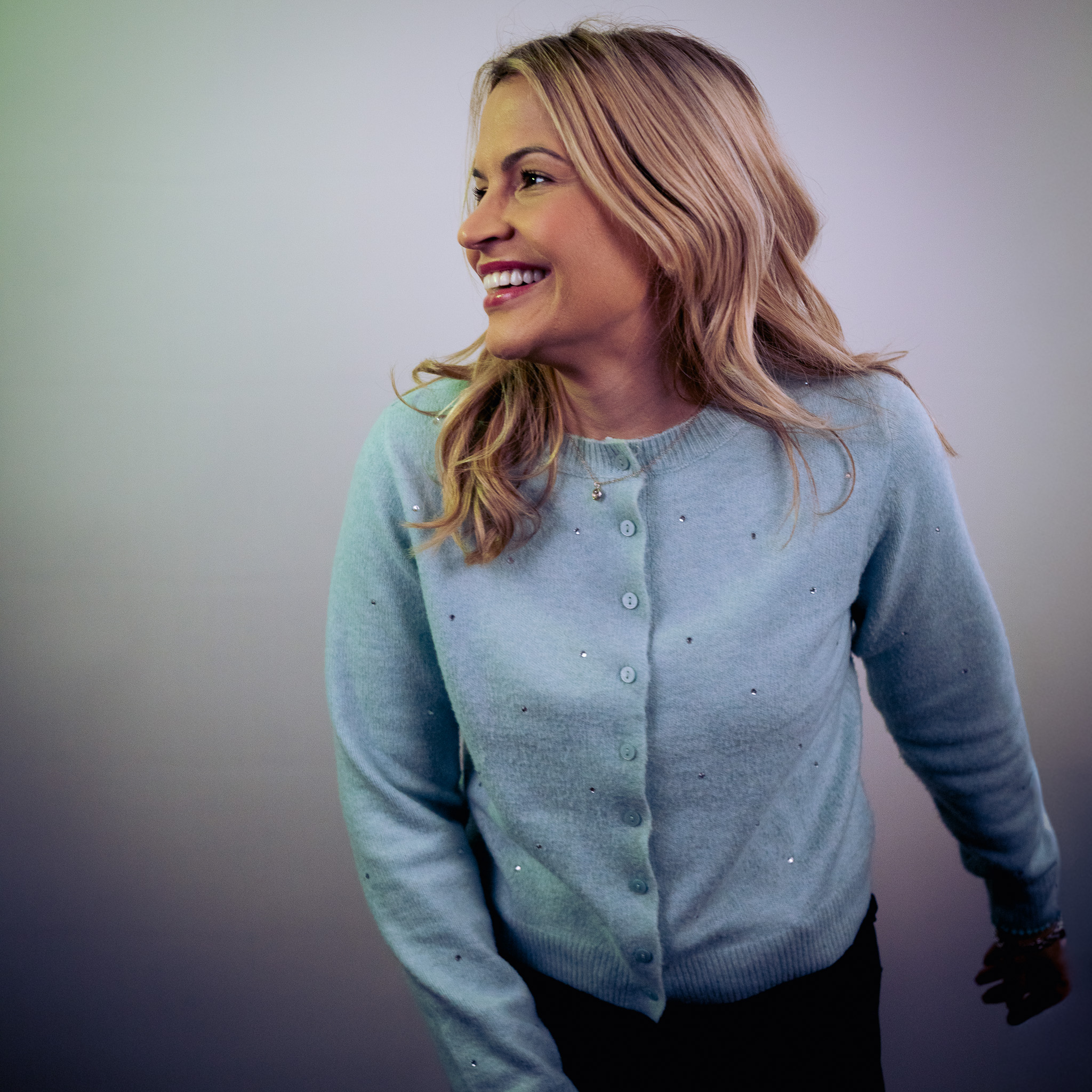
We do not have the luxury of deciding what kind of family or social class we are born into as individuals. We grow, and we develop our understanding of life based on what surrounds us and what we are taught by our family—if they are around to teach us. We don’t get to choose what they teach. We conform to, or run from, the perspectives we are fed. Inherently, as children, we want to be loved and cared for. As adults, we learn how best to love and care for ourselves—we grow to nourish ourselves outside of the expectations and success formulas embedded in the psyche by our childhood caretakers. These family dynamics and early childhood lessons are deeply present in Katy’s journey from an emotionally neglected child to a confident woman in recovery.
Katy’s story is important because she sheds light on a rare kind of upbringing that helps us understand the psychologically complex challenges faced by someone who was raised around celebrity limelight in Los Angeles. Amidst complex and dysfunctional interpersonal family dynamics, riddled with addiction—often presenting themselves as a white picket fence family. The illusions and expectations presented by wealth, attraction, and popularity so easily warp our understanding of what it means to function happily. Even more so as young children, with even longer-lasting effects into adulthood. Sometimes, in order to discover who one truly is, they must tumble and fall from the born-of-illusion, shattering the parentally fashioned molds shaped for them as children, yet seldom asked, “Was the mold truly ever a fit?”
“My mom put me on diet pills when I was 11. I didn’t have a chance to ever be able to love myself because I was always trying to prove to my parents that I was perfect looking and that I was perfect in school.” Katy’s mother’s standard for beauty, body image, and academia translated to diet pills and Adderall to manage attention and focus while just a child—taking high-intensity stimulants while still developing physically and emotionally. By age 14, the combination of substance use and an emerging drinking habit began to shape her adolescence. “By 11th grade, I was also taking Klonopin and Xanax, but my drinking really took off,” Katy says, “I was blacking out, getting angry, doing reckless things.”
Katy grew up in Encino, California, the youngest of three siblings. On the surface, her life seemed perfect: private schools, financial security, and a family entrenched in Los Angeles affluence. Yet, beneath that image, addiction ran deep—particularly on her mother’s side of the family. Some relatives achieved decades of sobriety, but the pattern of substance use lingered as a quiet, persistent influence.
Her childhood was not marked by dramatic tragedy, but by absence. With a nine-year age gap between her and her oldest sibling, and seven years with the middle child, Katy was essentially raised as an only child—often under the supervision of the family maid. Her parents’ divorce in eighth grade amplified that sense of isolation. “Love became gifts, money, presents,” she says, “That’s all I knew. Everything became transactional. It made relationships later in life really confusing and shallow.”
Around ninth grade, another, darker influence emerged. Her high school vice principal began grooming her—a twisted relationship dynamic that would continue to influence her over the next two decades. Married and in his mid-thirties, he drew Katy in over several years, “He made me fall in love with him…At night, I would go on instant messenger to talk to him. He fucked me up, made CDs, mixes, only songs that had my name in them…my pictures…And so I didn’t want to leave this person, and I didn’t have anyone around to really know what was going on.”
Katy’s pursuit of freedom and independence led her to the University of Colorado Boulder, a school known for its party culture. Yet academically, she struggled almost immediately, overwhelmed by substances and the lingering obsession with her vice principal. “Academically, I could barely function…I failed everything almost immediately,” she says. Her first year devolved into a blur of drugs, partying, and emotional dependence—she didn’t make it back for her second year.
By the time she was twenty, she had her first DUI—crashing into a car on Ventura Boulevard at 60MPH and attempting to flee the scene. Her mother intervened, sending her to a treatment program in Orange County. She later entered sober living on the beach—a place she loved so much she suggested her mother open similar programs. Her mother eventually did, creating three sober living houses and a treatment center.
Loss and trauma were constant, “One of my best friends from there died,” she said quietly. “Another woman, who taught me everything about drugs, was a therapist and completely messed herself up.” Later, she would discover her mother’s own hidden addiction, “She had polio as a child,” she explained, “lived in chronic pain, became a functioning addict with pain pills. I didn’t even realize how bad it was until later.” Eventually, the treatment center her mother ran collapsed. “It went too far,” she said.
By age twenty-six, she had returned to Los Angeles, moving in with her father. She enrolled in art school for web design. At art school, she was prescribed 180 Adderall pills a month, taking ten a day. “I would stay up all night working on projects and never finish them…there were 20,000 versions that all needed to be perfect. Nobody slept at that school—people were there all hours of the night on the computers.” When she did manage to attend class, “the teachers during critique were like, ‘What the fuck is this?’ It was because I did too much. I ended up pretty much failing out.”
The cycle of rehab and relapse intensified, and exercise became another addiction, “Three spin classes a day, four yoga classes,” she recalls, “It was extreme and directly tied to Adderall.” Over the years, she would attend fifteen treatment programs, some initiated after episodes of psychosis induced by her medication. Her mother would intervene, sending her to all-girls treatment centers, only for her to run away, return to friends, and resume substance use.
Things began to change after staying sober for three months at an inpatient facility in Pasadena, followed by nearly a year in sober living—the longest sustained sobriety she had experienced. Katy began working in restaurants, moving from server to bartender, eventually taking on management roles and opening restaurants. She functioned for a time, but the adderall slowly found its way back into her daily routine—one day she had none left, thus couldn’t perform at work, and eventually lost her job.
Katy later moved in with Billy, a stable bartender and property owner. She concealed her addiction while living in the same household as a heroin and meth user, who essentially acted as her dealer. The relationship was unhealthy and codependent—marked by mutual infidelity—but provided some semblance of stability. Animals remained her true sanctuary—two Shih Tzus, Shorty and Hudson, were her closest companions for eighteen years. The pattern of trauma and addiction replayed old family dynamics. Billy reflected her father emotionally: financially supportive yet distant, secretive, and emotionally unavailable.
As her mother’s health rapidly declined just before COVID, her own life began to unravel at the same time. She was still working, still trying to function—but barely. One afternoon, outside a vet’s office, Katy left her car running with the keys inside. She watched, frozen, as two men jumped in and stole it right in front of her. Not long after, another accident nearly took her life. While driving a rental SUV, she stepped out without putting it in park—the vehicle rolled over her leg. She yanked herself out from beneath it while it was still moving, just before it smashed into another car. She was rushed to the ER with severe injuries. From the hospital, she called her mother for help. Her mother declined, “I don’t leave the house after five,” she said.
Through this period, Katy watched her mother decline with terror and helplessness—a trauma that continues to affect her deeply. Despite their differences, their mother had always believed in Katy’s potential: “You’d be a great drug and alcohol counselor if you could just get off the shit.” Helping others came naturally. Helping herself remained a battle.
When her mother’s final decline came, it was agonizing. She was able to say goodbye during a moment of clarity, high, but lucid enough to offer farewell. A trip to Mexico to visit her father followed, yet even there, the weight of her mother’s illness hung over her. Calls from the hospital confirmed her mother was struggling to breathe. Ultimately, Katy returned home to witness the final moments, standing at the door as her mother endured immense pain, advocating for her comfort while absorbing the shock and grief of impending loss.
From that point on, her addiction escalated to terrifying levels. After her mother’s death, whatever thin limits had remained disappeared. She began moving constantly—apartments, hotels, borrowed places—never settling, never grounded. Meth had fully replaced Adderall now, and it took over fast and violently. She was smoking daily. Obsessively. Paranoid. Dismantling everything around her.
Televisions were destroyed and replaced—then destroyed again. Dishwashers were taken apart piece by piece. Phones were smashed. “Everything I had, I destroyed…it’s crazy looking back.”
Katy drifted between hotels and short-lived apartments. Eventually, in what she believes may have been a meth psychosis, she reconnected with a man who would dominate the next two years of her life—controlling, narcissistic, and destructive. The relationship became another trap, another mirror of the chaos she already lived inside. Then came the first overdose.
Taking what she believed was Xanax turned out to be laced with fentanyl. She woke up in an ambulance with her heart violently restarting inside her chest, “I remember my heart hurting, just pumping.” At the hospital, she demanded to leave the moment she was conscious.
Between 2020 and 2025, Katy would be hospitalized in psychiatric wards—each stay more severe than the last. The second overdose nearly killed her. Billy was asleep beside her. She tried to explain that she felt wrong. He told her to go back to sleep. When he woke again, she had turned blue and stopped breathing. He performed CPR, and paramedics administered Narcan twice. It didn’t work. She woke later to a defibrillator shocking her back to life in the ER. Her body temperature had crashed. She couldn’t walk. She was vomiting uncontrollably. “It was the worst experience of my life.”
Back in Los Angeles, after the second overdose, Katy’s father told her plainly: he was terrified he would get a call saying she was dead. Out of options, she contacted a former counselor. One name kept coming up from people she trusted—people who were still sober. She arrived at Beit T’Shuvah without certainty. Seven months later, she remains.
Katy comments on the magic of BTS bluntly, “Beit T’Shuvah—I think it’s beautiful—I can understand, I can start to live life here. They give you enough rope to hang yourself. And I didn’t understand that in the beginning.” Here it’s on you to make the changes you wish to see. No one is going to drag you through it—you have to want it for yourself, and Katy finally does.
She is working the steps, has a sponsor, works as a PF intern, and is studying to become a therapist. Katy is learning—slowly, imperfectly—that survival itself is not failure. That staying is harder than running. That healing does not arrive as a sudden transformation, but as a series of decisions made when no one is watching. “I’m taking this seriously,” she says. And that seriousness does not look dramatic. It looks like showing up. Writing inventory. Asking for help. Letting go of identities that once felt like armor. Letting people see who she really is.
There is still grief. Still family fracture. Still fear. The future is uncertain. And yet—something has shifted. She is no longer trying to outrun herself. Today, she is learning a quieter economy—built on honesty, structure, and the fragile courage it takes to be known.
Katy is now the artist of her true destiny. She is the one who casts the mold. She is the one shaping a future of happiness—a happiness unique only to her, and one that fits just right.