
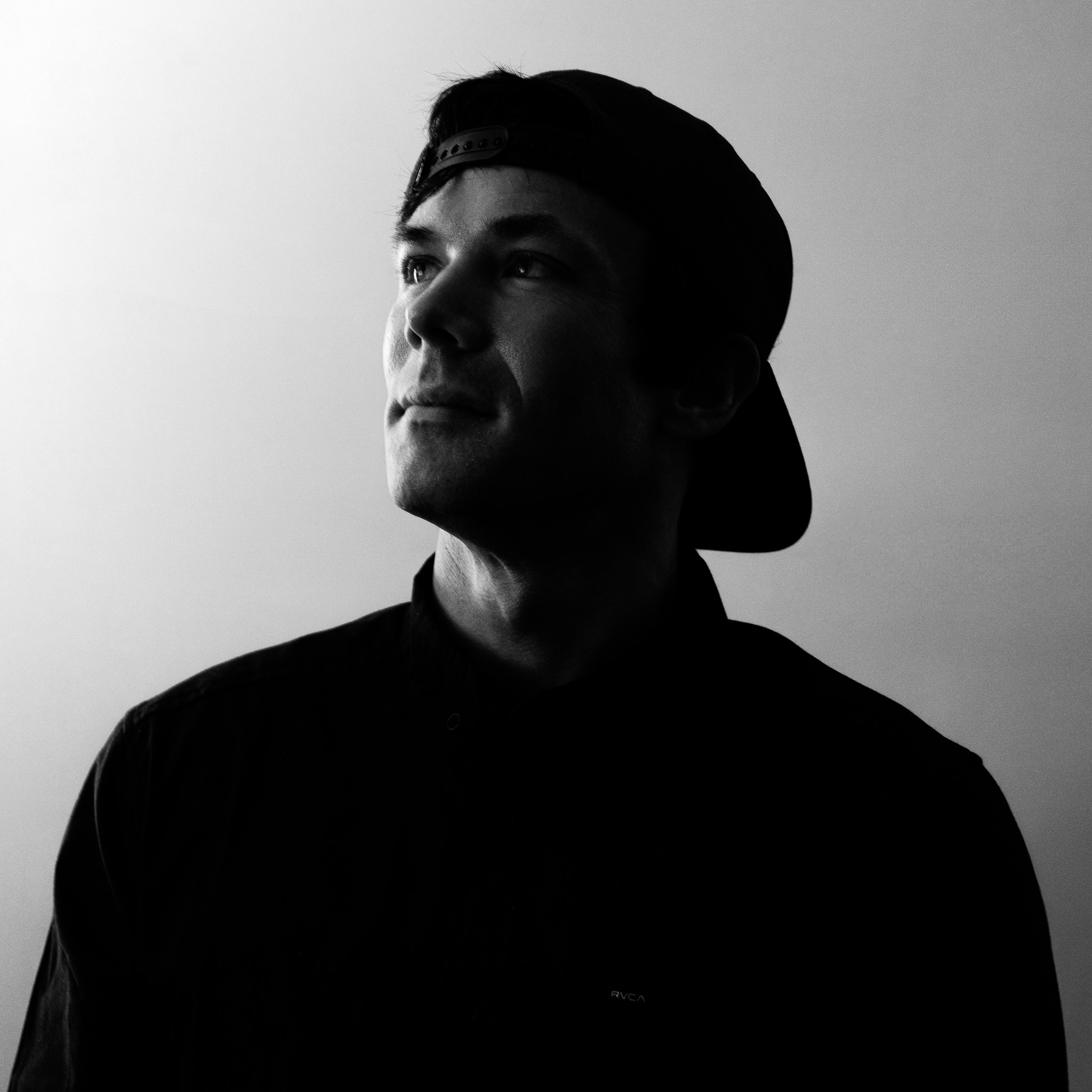
Recovery always talks about community and family as more than an aspirational achievement. Not just something to strive for but a basic human right—the air of the soul. For many of us in our addictions, we gasped for even the slightest puff of connection. Graeme is a perfect example of the deep truth behind the old Johann Hari adage we quote ever so often, “The opposite of addiction is connection.” Because today, Graeme breathes deeply.
Graeme N. was born in Santa Barbara, beautiful sunny Santa Barbara, to a father and a mother who didn’t fit the mold and never tried to. “My dad’s a white Anglo-Saxon Protestant, and my mom’s an Ashkenazi Jew…and they’re ex hippies.” His father had been an acupuncturist, a homeopath who once lived in Sri Lanka, an abalone diver who spent the better part of a decade going down into the cold Pacific off the Santa Barbara coast, and finally a stay-at-home dad. His mother carried the family as a home-birth nurse midwife. They were both progressive, quietly against the grain of everything—and that, somehow, is exactly what their younger son set himself against. “They’re kind of against the mainstream,” he says with a chuckle, “and I kind of, I guess, was all for the mainstream.” Anything he was told, he did the opposite, like a compass that pointed South. As a young kid, he attended a very liberal school. One of those schools where you call your teachers by their first names, hug them, and probably get graded in clouds and rainbows. It wasn’t his style even as a boy. So, naturally, he found his own ways of revolting—he loved to stir up mischief—protest against the protester. By high school, the shape of his hunger had come clear, and it was the precise inverse of the values he’d been raised on. “I was interested in, I don’t know, power, money, and respect. I was definitely drawn to shiny things and people with big, nice houses and lots of cars. And that’s exactly the opposite of the ideals my parents tried to raise me with.”
Like so many of us, the first pull was small and ordinary—marijuana at thirteen, the standard joint behind the school. “I have a very standardized story with that,” he says bashfully, and he’s right, but that doesn’t make it any less impactful. Because once the door, or dare I say the gateway, is open, anything can slip through. “It honestly opened me up to the realization that my mind could be altered in various ways. And that’s something that I took with me for decades.” The pills came fast behind it. He watched the other kids get their Adderall and decided he wanted in, so he did the improbable thing: he talked his pill-wary, ex-hippie parents into letting him see a doctor and get a prescription. There he was, still in his teens and already engineering his own amphetamine supply by sheer force of will. The pills worked—maybe too well—giving him the ability to study with Herculean endurance. He eventually studied himself into UCLA—his dream school. “Okay, I’ve made it academically, and everything’s okay.” It wasn’t.
Graeme attended UCLA for five years, and when he’s asked why so long, he doesn’t bother dressing it up. “Debauchery,” he blurts with a mix of shame and reminiscence. “I was in a frat.” Those years were a long bright blur he can still summon with real affection—music festivals through every season, spring breaks in Miami and the British Virgin Islands, time on boats, summers working or wandering abroad, an internship at a civil engineering firm in India that arrived, like nearly everything in that life, through the brotherhood. “Almost all my jobs were through the frat at the time. My life kind of revolved around a lot of the connections.” Pool boy in Bel Air. A cushy fintech sales job on Fourth Street in Santa Monica because a brother’s father knew someone, and a Brentwood condo to match. The benefit of the brotherhood—the community—was true to him. The weight of that is not lost on him, but the connotation of frats and Greek life has certainly been stained in recent years—causing many mixed feelings about his experiences at the time.
Underneath the bright blur, the trips, the girls, the parties, he was falling. The addiction was running, he figures, at a 9.5—a needle pinned somewhere near the end of the dial. Not quite at the 11th hour, but certainly nowhere before 10:59. Because of the pills and drinks, Graeme has a long, frightening history of nodding off behind the wheel of a few thousand pounds of moving metal. In January of 2021, up in Oakland, he passed out on the freeway at midnight and woke up twelve hours later in a hospital bed, slowly assembling the night from the wreckage others described. A flipped car, a fractured neck, a broken cage of ribs. The twenty-five staples in his head told the story of his body hanging inverted for six hours until a man arrived to open the auto body shop his car had crashed into. Blood transfusions. A back surgery. It’s 2021, so COVID meant no visitors, no one in the room. Graeme was alone. “I hoped at the time that would be a turning point. It wasn’t.” A year later—a whole year spent healing—he was nodding off at the wheel again. What haunts him isn’t his own brush with death. It’s the fear that he could have hurt someone else—a glimpse into his gentle, compassionate soul.
After college, after the crash, the descent only quickened. They have a term in the program of AA, “pulling a geography.” This refers to changing your location to escape your problems. The follow-up cliché is always, as Graeme so lovingly quotes, “Wherever you go, there you are.” Graeme decided to pull one of these geographies. Then another. Then another. He was basically spinning the globe. But it wasn’t all bad. It wasn’t all escape. Traveling is something he loves with his whole heart. He has since he was a kid, and his parents would take his family on trips to Mexico to build houses for the poor. He likes seeing how other people live, likes the way a foreign place becomes a mirror you can’t look away from. He learned a lot about himself by watching those entirely different from him.
But, wherever he went, there he was and there was his addiction. So, in a blur, before he knew it had happened, he was sleeping on a rolled-up mat on the floor of his friend’s kitchen…across from a Caiman alligator cage—a detail so absurd it simply could not be fabricated. He calls that the lowest he’s ever been. It ended in a psych hospital, withdrawing, hopeless. Alone again.
There was, improbably, a year of sobriety folded into all of this—eight months in a structured sober living in Agoura Hills, a real AA program, and then the slow current of fifty- and sixty-hour work weeks that carried him quietly back out to sea until the meetings were just something he used to do. He celebrated that year clean while working on a cucumber farm in Israel…deep in the Gaza envelope in the summer of 2024. He initially went to Israel, inspired by October 7th, but when he got there, he found more than he bargained for. From the border, he could hear the howitzers and feel the ground move near the Nova festival site. Then one night, after he had relapsed, he was out drinking in Tel Aviv, and a low-flying drone slipped through the airspace and struck a building a stone’s throw from his hotel. “What am I doing here?” he thought. So, he made an international call to a pill mill doctor and headed to home soil. Doctor after doctor, different names, different IDs.
The bottom, when it finally arrived, was living out of his car. Kicked out of one sober living and then another, he washed up in Simi Valley—drifting between his backseat and hotel rooms, telling himself he loved the independence even as the floor gave way beneath it. He was using anything within reach now, the whole grim catalog that hadn’t even been part of his story before. And it was there, in the rubble of all of it, that a voice he’d buried more than a decade earlier finally surfaced.
Because Graeme had been pointed here once before, eleven years ago, when he didn’t want to hear it. At UCLA there was a social worker named Ira Wohl—a Jewish man who’d won an Academy Award for a film that follows Philly Wohl, Ira’s mentally handicapped cousin, who at that time was 52 years old and still living with his elderly parents—and he became the first person ever to look at Graeme and name him an alcoholic. Wohl learned his mother was Jewish and wrote him the one prescription he didn’t want to fill: “You need to go to Beit T’Shuvah and scrub toilets with a toothbrush.” Graeme’s answer, at the time, was the only one he had. “What the fuck? Fuck this guy.” But the name stayed in him like a seed in cold ground. Year after year, in rooms all across Los Angeles, the seed was watered by BTS alumni he would come across whose lives had been forever altered.
Graeme walked through the doors of Beit T’Shuvah this past March. What he has found here is the thing the bright rooms only counterfeited—a community that actually holds because it actually asks. He says yes to everything now. He’s in Freedom Song, the recovery musical that is the single last thing this self-described non-theater kid ever pictured himself doing, and he’s taken a small part in a play called ‘The Curious Savage’—it’s all very High School Musical Troy Bolton of him, and the openness is infectious. All of this is somehow balanced atop a thirty-two-hour-a-week internship as a Program Facilitator. Why is he doing all of this? Because he believes that for months he has been given so much and all he wants to do now is give back. “I think of Beit T’Shuvah as like a lifeboat.”
Ask him what makes this place different, and he’ll circle the obvious answer before surrendering to it. There’s something tender in the staff and community that holds the residents tightly until they can hold themselves…and better yet, hold others. That’s community.
The boy who chased shiny things across continents, who walked into room after gleaming room and waited to feel held, is learning at last to be one of the cogs that makes the watch tick rather than someone standing outside, begging to read the time. So, be like Graeme. Take in this community. Hold it close. And breathe deeply, because you’re home.