
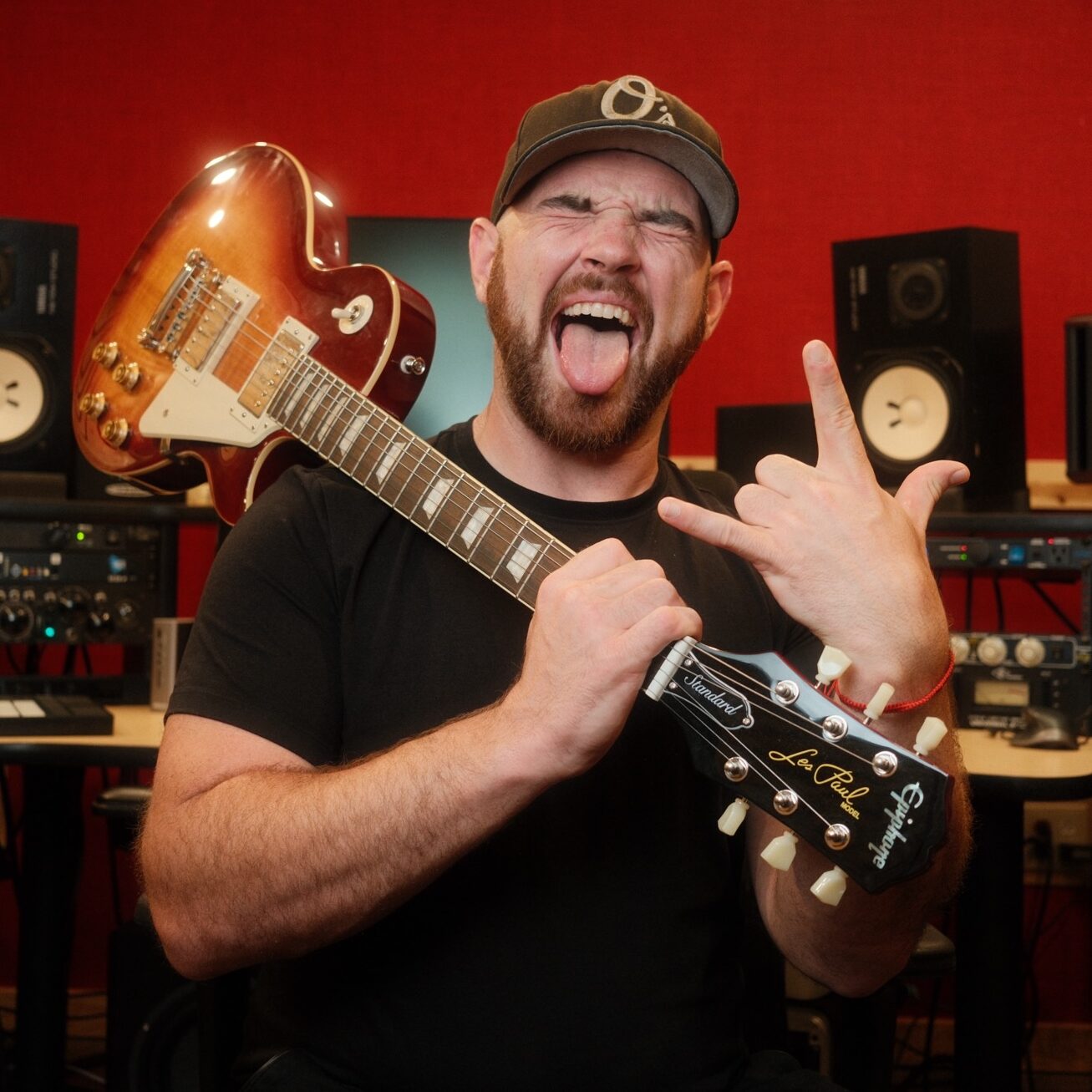
The city of Baltimore smells like whatever spices Charley’s family is cooking that day. Some days it’s cinnamon. Others, it’s garlic or black pepper drifting off the port, wafting over the neighborhoods. For most people, that fragrance is just atmosphere. For Charley M., it was a birthright—one he spent the better part of his life trying to run from.
He grew up in Towson, Baltimore County’s yuppie enclave, twenty minutes north of the city, the grandson of a man who ran the world’s most prominent spice company in the world. (HIPAA won’t let me name it, but you know the one). There were country clubs, good schools—the kind of generational money that changes how people look at you before you’ve said a word. That was exactly what Charley hated most. “People saw money and not Charley.” That distinction would haunt him for decades. So he hid it, or weaponized it, depending on the season—eventually learning in middle school that dropping the spice name bought him a hollow kind of social currency, the sort where people invite you to their party but never actually see you.
What they didn’t see was the kid underneath: the one having panic attacks at ten years old because he couldn’t finish a book report, the one diagnosed with dyslexia and ADD who’d start a test and watch the entire room finish around him, one by one, until he was the last person left at his desk. “I felt stupid,” he says, and the words land with the weight of someone who has been carrying them for a very long time. His father wasn’t shy about reinforcing that verdict. “What the fuck is wrong with you?” wasn’t a question in his household—it was a conclusion, handed down repeatedly and without appeal. That kind of accumulation is its own kind of trauma. “You have the Big-T Trauma: car crashes, war, something like that. But you also have the little bits. The trauma of hearing.” Unfortunately, Charley didn’t just hear…he listened.
His mother was the counterweight—loving, warm, always there with a soft landing type of parent. But the architecture of the house was already warped. His father’s model of manhood was instructive in all the wrong ways: come home from work, smoke pot in the bathroom, pour a 90-percent Bacardi with a splash of Coke, and tune out. That was the blueprint. That was what the man of the house looked like.
Then, somewhere around thirteen, something happened that changed the entire shape of his life. Charley was in the thick of his self-harm years (he mentioned to me, as if it was standard for the age)—a stretch from twelve to fifteen he describes with careful remove. That’s when music found him. Specifically Blink-182. “I believe it was very spiritual for me. It hit me.” Something in those songs reached across three thousand miles and told a kid in suburban Maryland that he wasn’t the only one feeling what he felt—that the unnamed, unspeakable weight had a sound, and the sound was on his side. “I almost killed myself before music. Music came into my life, and the spirituality was all around me whether I realized it or not.” It was the antidote for his trauma. “I remember saying so many times that music would never cheat on me. Music would never yell at me. Music was safe.”
He built an identity around rock ‘n roll. Black fingernails, he’d paint with Sharpie. Pants below his ass (just to get yelled at). Three different high schools. A full-throated rejection of the preppy pinks and blues his mother had carefully assembled in favor of something that actually told the truth. The punk scene—or at least his version of it, assembled from documentaries and music videos and whatever he could absorb—gave him both a costume and a purpose. It told him who he was when everything else was telling him who he wasn’t. More than that, it gave him a philosophy. He understood, instinctively, the reason music existed: somebody he’d never met could play three chords and make you feel less alone. “That’s why music became such a big passion for me. If I could do that for one other person…to make them feel less alone, I’m doing my job.”
Fifteen. Charley walks into his dad’s room to see the suitcase already half-packed. “I’m leaving. I’m not coming back. I don’t love your mom anymore. You’re man of the house.” His grandfather’s car was waiting outside. Just like that, his family rearranged itself, and a fifteen-year-old boy was handed the keys to a household already in freefall. Soon, his mother got hooked on OxyContin and Adderall. Charley—without a permit, without a license—drove his younger siblings to school because someone had to, and he’d already decided in some wordless teenage way that he was too far gone to save but they weren’t. “Somehow I knew I was already fucked up,” avoiding eye contact, “but they could get out.”
His band became his salvation. Over N Out—five to six days a week of practice, nearly a decade together, opening for national acts, eventually getting signed to a small label. “I called it my second family.” He studied music theory at community college and discovered audio engineering, finding he could be the translator between the musicians and the machines—the one who heard what everyone was trying to say and knew how to make it land. He was, for the first time, excelling in school, and even more than that, he was the person a room needed. When the band eventually broke up, it was devastating in the way that only losing a family can be. “That was my safe place. That was the only thing I had achieved.”
But there was always something else running underneath. Throughout his whole life—his entire adolescence, alcohol and pot were prevalent. Sex, drugs, and rock and roll. It wasn’t until he turned 22 when Cocaine entered the picture, dressed up as a good time, the way it always is. By twenty-seven, his ex-fiancée looked at him and said what she’d known for a while: “You love cocaine more than you love me, and I can’t do this anymore.” He stared at the wall. He said okay. A new band came next—Follow Your Bliss—and with it, crack cocaine. “I blinked, and two years disappeared.”
Hotel hopping across Baltimore with a rotating cast he barely knew. Guns drawn on him in neighborhoods where he had no business being in. Charley hiding behind dumpsters with the crack in his shoe, thinking, “If I’m going to die, I’m going to die high.” His family eventually kicked him out and told him not to come back, which he now describes as “the best thing that had ever happened to me.”
Even that didn’t get him sober.
There were treatment centers. Sober houses. A moment of getting caught smoking crack in the basement of an AA meeting. A stretch of sobriety at twenty-nine that held for a while—sixteen months in sober living, sponsoring others, half-working the steps—until his inner storm weathered his soul. “I remember feeling like it was still a rainy day every day.” He relapsed in 2023. But when “a girl with beautiful brown eyes” started FaceTiming him from Los Angeles, telling him about a place called Beit T’Shuvah: a studio, a music scene, a community built on hope, his eyebrows perked up. He showed up in April of last year. Suffice it to say, it didn’t go smoothly at first. He left, did some more research on the streets and found his way back home.
Thirty days sober, Pianist and Choir Director, Laura Bagish came to him—not with an invitation, but with a need. “It wasn’t, ‘Hey, you should try out for the band.’ It was, ‘we need you.'” Those three words landed somewhere deep. He hadn’t been needed—not in a band, not by a family, not by anyone—not in a long time. “That hit the ego a different way. It almost brought me to tears.” Hearing him talk about it, it’s clear that it still could.
Playing in the BTS band is not a rock concert, as Laura had to remind him early on. “These are prayers. Calm down.” There were nights he stood on stage and stared at the ground and hated everything in his line of sight—brewing with the type of resentment that can only be achieved by someone newly sober, locked in a rehab, asked to be of service. But, there were nights the music cracked open something he didn’t have language for. What the commitment gave him—week after week, regardless of how he felt—was something he’d never really had: consistency. Discipline. A reason to show up, even when showing up was the last thing he wanted to do. “The discipline of being able to show up is the consistency is something I haven’t done before. It not only gave me purpose, but allowed me to give back and also change that narrative that I’m a piece of shit.”
He’s the BTS studio intern now—working in the very space that first drew him to this place. Music, again, is revealing its depths as he gets sober enough to actually feel it. “Emotionally wise, it was like a valve opened up and everything that I had masked and covered up for years at a time came out, whether I wanted to or not.” He has a theology about this, though he wouldn’t call it that. “I think all artists are musicians, but not all musicians are artists. I have to create.” The perfectionism that comes with it—the obsession over snare tone, the endless revision—is its own kind of spiritual practice. “It’s tedious, but it’s part of my spirit.”
Talk about the perfect example of recovering your passion and discovering your purpose.
This trip around the Beit T’Shuvah sun has recontextualized so much for him. “The more I try to explain what makes this place special, the more I realize how unexplainable it is.” The kid who almost didn’t make it to fourteen because he couldn’t bear the weight of his own life is here, doing something real—helping people and helping himself. “For the first time in my life, I have accomplished something that I didn’t think was possible a year ago and feel good about it.” Charley’s found a new band—the Beit T’Shuvah community—and they’re never going to break up. He’s turning his recovery up to eleven—putting his all into his program. Just when the world thought his show was over, he found hope, he found recovery, he found Beit T’Shuvah.
Raise the curtain.
Cue the encore.
…and don’t forget it’s a prayer.