
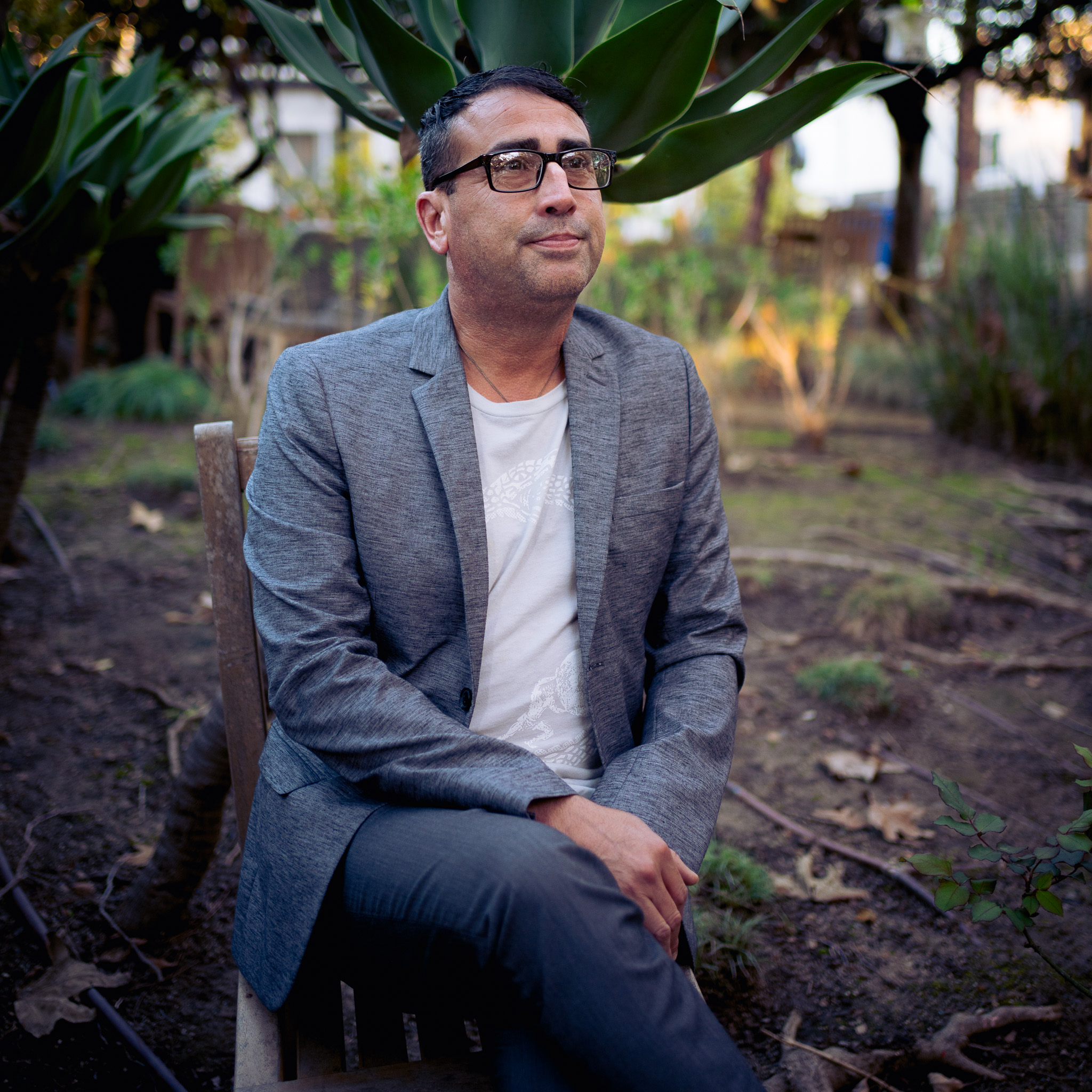
Augustin L. is the type of person who just emanates good vibes. He is truly such a warm and friendly character, a face you won’t soon forget. This man possesses a genuine kindness matched with a friendly smile that feels like a warm hug when one needs it the very most. His personality breathes subtle yet vibrant imagery in such a way that his life almost paints itself in one’s mind. Hearing his story felt like scenes from a movie—the memories palpable and visceral, the emotion so real and so raw, yet effortlessly communicated as if it was all just a walk in the park. But it wasn’t. There was a park, but he was living in it.
As Augustin recounts different chapters of his life, I catch glimpses of rugged emotion, and these glances provide insight into the intense impressions of the trauma stapled throughout his experience. On one side of his smile is a human who has lived through a tremendous amount of suffering since a young age, a victim of transgenerational physical abuse, and on the other is an intellectual who was reading at a college level by first grade.
For as far back as he can remember, self‑hatred was the constant. Abuse in every form—more than a child should ever endure—shaped the landscape of his earliest years. His older sister hurt him physically, emotionally, and verbally from the time he was two and a half until he was thirteen. His mother, overworked, overwhelmed, and carrying her own history of trauma, brought her own chaos into the home. She was a single mom working two or three jobs to keep them fed and clothed, doing what she could, but the violence and volatility lingered long after the survival needs were met.
It took Augustin decades to separate compassion from justification, “It’s okay that she went through a lot,” he says, “And it’s not okay what she did.” Only recently has he reached a place where forgiveness even feels possible. He’s forty‑seven now, unpacking nearly half a century of resentment, confusion, and silence.
Augustin grew up in Palm Springs back when the desert still felt empty. He never knew his father, a void that carved deep questions into his sense of worth. His mother’s expectations were impossible to decipher. She would show up proudly for academic awards, then beat him if a grade fell short.
His grandmother was the anchor. She taught him to read and write at four, to do math, and to love learning. He read her the newspaper every morning, a ritual that built both his intellect and some of the only safety he knew. Academically, he soared—reading = Shakespeare by third grade, devouring everything assigned in high school before he ever walked into class. But emotionally, he shut down. By thirteen, he had stopped feeling anything but anger and depression due to the physical abuse at home.
Family trauma ran deep—so deep it felt inherited. Abuse wasn’t an isolated story; it was a lineage. His biological grandfather was a violent predator who terrorized generations. Trauma trickled down through anxiety, depression, mental illness—a silent inheritance.
Despite the chaos, he worked from a young age. He got his first under‑the‑table job at fourteen and his first official one at fifteen. But adolescence brought its own turbulence—growing nearly a foot in one summer, becoming someone new physically while still feeling small inside. He oscillated between nerds and “bad kids,” between arrogance and insecurity, never landing comfortably anywhere. Book smart, but socially lost.
Alcohol touched his life early, but wouldn’t make a comeback until his mid twenties—his first sip was at age four at a family party. Weed came with a traumatic introduction: the first hit was laced with PCP. In high school, he barely drank, focusing instead on plans for college and a different future.
College was where he thrived, studying history, English, humanities—taking astrophysics “for fun.” But beneath the intelligence, addiction quietly took root. His first, he says now, was sex. Once he lost his virginity, he chased it recklessly, cheating on partners over and over, a pattern that followed him into adulthood.
Then came the first major fracture: while caring for his grandmother as she died from bone cancer, he unraveled. She had been the most important person in his life, and losing her shattered something inside him. He didn’t cry. He hadn’t cried since thirteen. He simply shut down, slipping deeper into the numbness that had carried him thus far.
Work life fluctuated between success and collapse. He rose at a nonprofit supporting adults with developmental disabilities, eventually managing multiple programs—one of the best jobs he ever had. Then addiction and heartbreak collided. A doctor prescribed him staggering amounts of Xanax (literally). 2 mg tablets, four to six times a day—launching a severe benzodiazepine addiction that led to his first suicide attempt at 26. He survived, waking up feeling like even that had been a failure.
Psych wards became a recurring backdrop—from age 27 to 33, then off and on throughout the years. He moved to L.A., landing in Echo Park among friends—academics, filmmakers, creatives. Drinking surged. Relationships formed and crumbled. He adapted to every crowd but belonged to none. Alcohol became the one way he could “feel comfortable.”
The chaos escalated—bar fights, dangerous nights, abusive relationships, countless drunk drives, being robbed at gunpoint, close calls with police.
Back to the desert. Now nonfunctional, drinking at least a handle of liquor a day. He met the mother of his daughter during this period—a librarian he connected with after running into her at a dive bar that opened at six in the morning. Their relationship, like everything then, was fueled by alcohol and instability. When she became pregnant, he panicked. Fatherhood felt impossible. But their daughter, Blue, became the one person he bonded with deeply. It’s now been three years since he’s seen her.
By the time Blue was born, Augustin’s life was already a battlefield. He was thirty-six, newly thrust into fatherhood, yet numb and incapable of feeling the miracle of holding his child. “She held onto my finger. I looked at her, and I felt nothing…I had been so emotionally stunted and hadn’t been in touch with my feelings for so long that even then at 36, I couldn’t feel anything for her”.
One memory stands out sharply: lying in bed drunk, his three-year-old daughter looking at him and calling him a “fucker.” There was no laughter in that moment, only recognition. Even at her age, she saw him clearly. He saw himself reflected back in her eyes with brutal clarity. He knew he needed help.
Treatment had been a revolving door. His first introduction to sobriety: grueling physical labor, no tapering off from withdrawal, and a body ravaged by years of alcohol abuse. Sixty days of detox in freezing winter, under the watch of higher-level residents rather than trained staff, brought him to the edge. He survived—but sobriety never stuck. Periods of clarity lasted months, sometimes a year, but each attempt ended with relapse.
Between 2017 and his arrival at Beit T’Shuvah in 2025, Augustin’s life was a cycle of rehab, sobriety, relapse, and homelessness. He found himself on the streets of Indio during a brutal summer, stripped down to black clothes, barely drinking water, relying on the kindness of a stranger who handed him $50 each day—money he would spend on vodka instead of survival. He wandered the desert, observing overdoses and despair, knowing that he could have easily been just another casualty. The life he’d built—degrees, jobs, careers—had slipped through his fingers. Family members stepped back, resigning themselves to what they expected: a slow, lonely decline. And for a time, he accepted it too. Every day was a question: why keep waking up?
Even in the chaos, fleeting moments of connection shone through. He found temporary housing in Indian Wells, working sporadically as a substitute teacher, trying to be present for his daughter. He met a woman—beautiful, chaotic, damaged—who became a mirror for his own self-destruction. They were always drunk, but never drank together—always clinging, always spiraling. That relationship, too, ended in heartbreak, and he later learned she had taken her own life.
It was at a treatment center in Riverside in 2023, where he first encountered Recovery Dharma, Buddhist recovery—a practice that didn’t promise miracles but offered a structure and a path forward he had never found before.
Eventually, he moved in with his younger brother, despite knowing the tension between them. It came to a head the day after July 4th. Asking for car keys while drunk, he provoked his brother’s short fuse. The fight ended with a severe beating—he was knocked out of his chair, left with bruises, and more trauma.
Shortly after, a friend connected him to Beit T’Shuvah. Within two weeks, he was inside, walking into a treatment center that demanded honesty, vulnerability, and persistence. He stopped drinking on July 18th, 2025—his official sober date.
“This has been the hardest treatment center I’ve ever been in,” he says. “I’m not lying to anyone anymore—not even myself. Whatever comes up, comes up.” He’s cried in offices, yelled at counselors, felt emotions he hadn’t touched since he was thirteen, “It’s a flood,” he says, “and I keep wanting to run. But I stay.”
Even as he sits in group rooms, watching people walk by outside, he reminds himself: he could be that person again, in a second. The streets are always there, ready to reclaim him if he falters, “There’s always something you shouldn’t like about being in treatment…If you’re really doing this right, it should be challenging. You should be feeling like shit, and you should sit with discomfort.”
Still, hope has emerged. He’s applying for jobs—case management, museums, nonprofit work. He’s considering returning to school, perhaps in library sciences or archiving, using the ancient Greek and Latin he studied in college. He dreams of handling special literature, contributing to something meaningful, while also finding his own happiness.
Augustin will tell you he’s lived as many different versions of himself as there are chapters in his life. He’s beginning to actually like the person he is becoming—but that’s a brand‑new experience—this is not a tidy ending. It’s a beginning carved from years of darkness, struggle, and loss. He has faced the streets, confronted addiction, and embraced vulnerability for the first time in decades. It’s in the small rituals he’s reclaimed: reading, writing, learning, connecting. He is building a life not defined by the shadows of his past but by the intention and care he brings to each day.
“Every day I wake up, and I get to choose. And today, I choose me.”
In Augustin, you see a truth that few people ever witness fully: that recovery is not a destination, but a practice. That strength is born not from perfection, but from persistence. The love he emanates is the compass that guides him forward. Today, Augustin meets the future not with fear or shame, but with openness, curiosity, and a quiet, steadfast joy.
And now, in those quiet moments, his love for his daughter reminds him of why he continues,
“Love you, Blue. See you soon.”